
Kuala Lumpur in Photos: Daytime and Nightlife
Kuala Lumpur is one of those cities that never stops moving. By day, it dazzles with gleaming skyscrapers, bustling streets, and cultural landmarks. By night, the city transforms into a playground of glowing lights, rooftop bars, and street food that never sleeps.
I spent time capturing both sides of Malaysia’s capital, and the result is this collection of photos that tell the story of a city alive 24/7.

Flags flying high at Merdeka Square, the historic heart of Kuala Lumpur.
Kuala Lumpur by Day
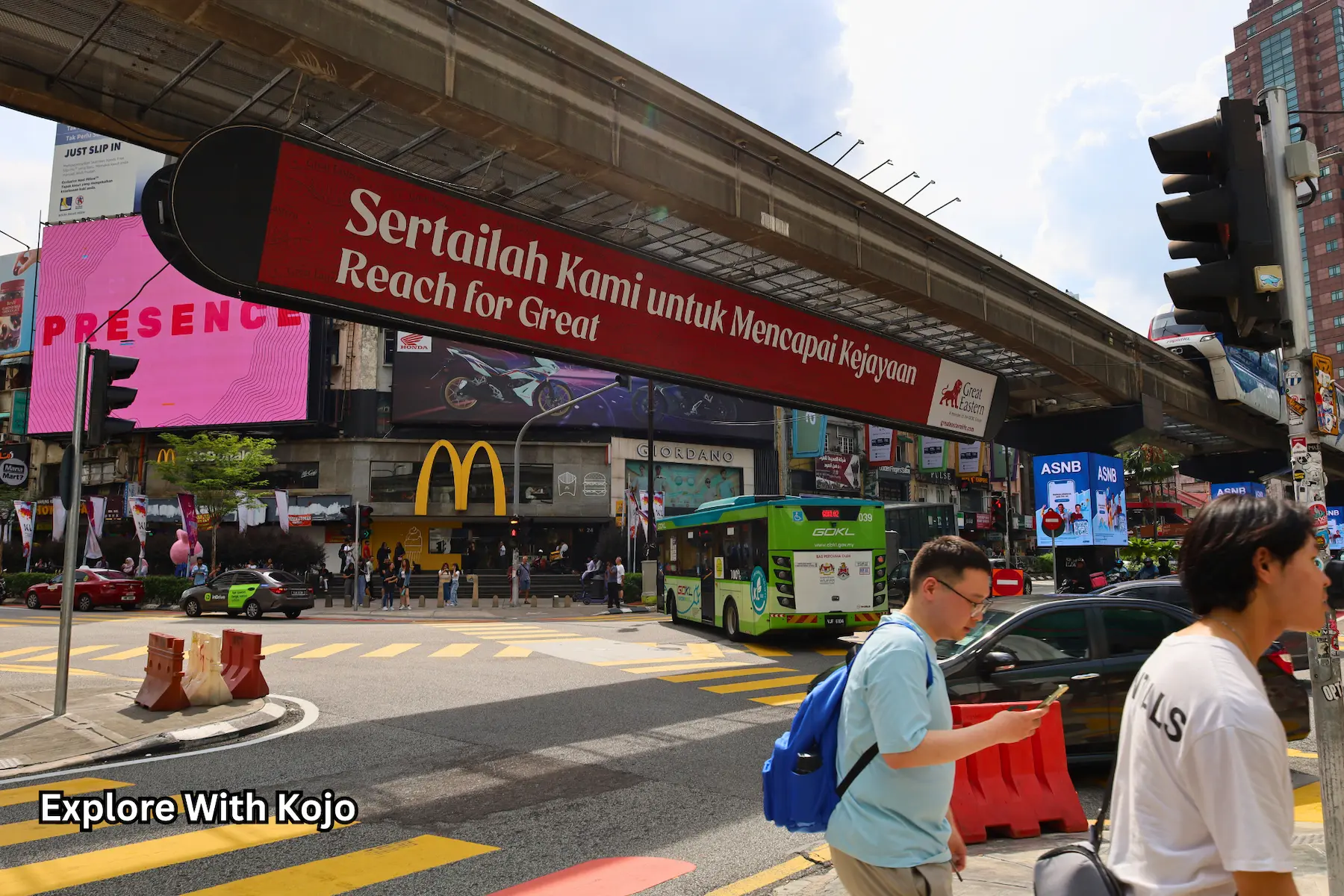
Walking through Kuala Lumpur in the daylight, I felt like the city was pulling me in every direction at once. One moment I was standing under the shadow of the Petronas Twin Towers, looking up at glass and steel that seemed to touch the sky. The next moment, I found myself weaving through traditional markets where vendors called out to me to patronize their stuff.
What I loved most about KL during the day was the contrast. I could be in a busy street filled with honking cars and people rushing past, then just a few steps later find myself in a peaceful park, watching families relax under the trees. I remember stopping often, camera in hand, trying to catch both the chaos and the calm that make Kuala Lumpur so magnetic.
These daytime shots are pieces of how I experienced it. Put simply, they are the rhythm of daily life in KL as I saw it through my own eyes.


Kuala Lumpur by Night
If Kuala Lumpur felt magnetic during the day, at night it was nothing short of electric. I remember standing on a rooftop, watching the city light up one tower at a time, and feeling like I was looking at a completely different world.
I spent hours wandering through Bukit Bintang, where neon signs lit up the night sky and the smell of sizzling street food drifted from every corner. Then I stopped for satay at a crowded stall, eating shoulder-to-shoulder with strangers who felt more like friends in that moment. A short walk away, I found quiet backstreets where locals played cards under dim lights, and the laughter carried into the night air.
What struck me most was the contrast. High above, rooftop bars were full of music and cocktails, while down below, the hawker stalls kept serving until late. I tried to capture it all from the glowing city views to the crowded food alleys that make Kuala Lumpur after dark so unforgettable.
These photos are my attempt to share that feeling with you:


Tips for Visiting Kuala Lumpur
After spending time exploring both day and night, I picked up a few things that will make your own trip to Kuala Lumpur smoother and more enjoyable:
1. Get a Touch ’n Go card
Public transportation in KL is solid, and a Touch ’n Go card makes life easier. I used it for the train, LRT, and even some buses. It saved me from fumbling for small change.
2. Don’t skip the street food
Some of my best meals were not in restaurants but at roadside stalls. Jalan Alor is a must, but honestly, I found good food everywhere I turned. If you see a stall packed with locals, that is your sign to try it.
3. Dress for the heat
KL is hot and humid year-round. I learned quickly that lightweight clothes are a lifesaver during the day, but carry something light for the evenings when you step into chilly, air-conditioned malls.
4. Mix the modern with the traditional
It is tempting to just stick to the malls and skyscrapers, but Kuala Lumpur’s charm is in its contrasts. I found that mixing visits to modern spots like the Petronas Towers with traditional temples and markets gave me the real KL experience.
5. Stay out late at least once
The city truly transforms at night. Even if you are not into bars or clubs, just walking through Bukit Bintang or Chinatown after dark is an experience. The energy, lights, and food stalls are unforgettable.
6. Be ready for sudden rain
KL’s weather can change in minutes. I got caught more than once without an umbrella, so learn from me and always pack one, especially if you are carrying camera gear.
7. Take your time
Kuala Lumpur is not a city you can rush through. Some of my best memories came from slowing down, people-watching in parks, or lingering at a café while the city moved around me.
Frequently Asked Questions About Kuala Lumpur
Travelers from all over the world often reach out to me with their questions about visiting Kuala Lumpur. Some ask me through comments on my videos, others send messages on social media, and quite a few email me directly. Over time, I’ve noticed that many of the questions overlap, especially when it comes to safety, budgeting, and how much time to spend in the city.
To make things easier for everyone planning a trip, I’ve put together this section where I answer some of the most common questions I receive about Kuala Lumpur. These answers are based on my own experiences exploring the city by both day and night, as well as conversations I’ve had with locals and fellow travelers along the way.
Is Kuala Lumpur safe for tourists?
For me, Kuala Lumpur felt like a very safe city to explore. I walked through busy neighborhoods during the day and even wandered around nightlife areas after dark without ever feeling threatened. Like any big city, there are pickpockets in crowded markets or busy streets, so I always kept my camera and bag close. But overall, I found people in KL to be friendly, welcoming, and ready to help if I looked lost.
What is the best time to visit Kuala Lumpur?
Kuala Lumpur is warm and humid almost all year, so the truth is you can visit anytime. I did notice that sudden rain showers are very common, especially during the monsoon months around March to April and September to November. Personally, I liked starting my days early, exploring outdoor attractions in the morning, and then saving the afternoons for malls, cafés, or museums when the rain came. That rhythm worked perfectly for me.
How many days do you need in Kuala Lumpur?
I would recommend at least three days. That gave me enough time to see the must-visit spots like the Petronas Twin Towers, Batu Caves, the King’s Palace and Merdeka Square, while also leaving space to enjoy the city at a slower pace. Some of my favorite memories in KL were not from sightseeing but from sitting in parks, trying street food at night markets, or getting lost in Chinatown. If you have more time, even better, but three days is a solid start.
Is Kuala Lumpur expensive?
Compared to cities like Singapore or Dubai, I found KL to be very affordable. Street food was cheap and delicious, public transportation was budget-friendly, and even hotels offered good value for money. Of course, if you want luxury, Kuala Lumpur has plenty of that too, with rooftop bars and high-end malls. What I loved most is that the city works for both budget travelers and those who want to splurge.
Do people speak English in Kuala Lumpur?
Yes, and this made my trip so much easier. I had no trouble ordering food, asking for directions, or chatting with locals. Most signs in transport stations and restaurants are in English too. I remember stopping at a street stall where the seller spoke very little English, but even then, with a few words and plenty of smiles, we understood each other perfectly. So don’t worry yourself at all because language won’t hold you back here.


Pingback: +60 Country Code: Which Country Does It Belong To? - Explore With Kojo
Pingback: Can You Cancel a Booking.com Reservation After Paying? Here’s What You Need to Know - Explore With Kojo
Pingback: Thailand Visa Run Guide 2025: How It Works, Who It Affects, and New Rules - Explore With Kojo