Cheapest Areas to Stay in Dubai (2025): Cheap, Safe & Metro-Connected
I recently received a question from someone moving to Dubai with his wife. They’d already secured a job, but the pay wasn’t great (at least not in the beginning) so they were looking for some of the cheapest areas to stay in Dubai that are on the metro line and still affordable.
It’s a question I completely understand. Dubai has a reputation for luxury, but the truth is that you don’t have to live in Downtown or Dubai Marina to enjoy a comfortable lifestyle. There are neighborhoods that offer reasonable rent, good metro access, and a strong community atmosphere, which is for anyone starting a new life in the city or just visiting on a budget.
Bur Dubai and Deira
When it comes to affordability, Bur Dubai and Deira are at the top of the list. These are the city’s older districts. By virtue of this, they are full of character and history. Furthermore, both sit conveniently on the Dubai Metro line, which makes daily commuting easy and cheap.
If I had to pick one, I’d go with Deira. It’s the cheapest place in Dubai to live while still staying well connected to the rest of the city. You can find a studio apartment for around AED 2,000 – 3,000 per month, often within walking distance of a metro station. For a couple or small family starting out, that’s a huge help financially.
Of course, Deira is crowded, and most buildings are older compared to newer developments in areas like Business Bay or Dubai Hills. But that’s part of its charm. To be honest, I think Deira feels more alive than most of its peers. It’s home to expats from all over the world and small family-run businesses. Groceries are cheaper, food is authentic, and you’ll always find something interesting within a short walk.
For Budget Travelers Visiting Dubai
If you’re visiting Dubai on a low budget, Deira and Bur Dubai also make excellent bases for exploring the city.
- They’re connected to the Red and Green Metro lines. And what does this mean? It basically means you can get almost anywhere – from the airport to Dubai Mall – without spending much on taxis.
- You’ll find dozens of affordable hotels and hostels, often at a fraction of the price of accommodations in Marina or Downtown.
- And because these are older parts of the city, you’ll be surrounded by traditional souks, local eateries, and cultural landmarks that show the real, everyday side of Dubai.
Safety and Everyday Life
Even though these areas are cheaper, you don’t need to worry much about your safety since Dubai remains one of the safest cities in the world. Street crime is almost non-existent, and you can walk around freely at night without worrying. This is something few big cities can offer. I think the only major city with safety comparable to Dubai’s is Singapore.
So whether you’re a new couple starting your life in Dubai or a traveler looking to stretch your budget, Deira is a great choice. It’s practical and very, very accessible.
What Deira Really Looks Like: A Visual Tour of Dubai’s Most Affordable Area
Now that I’ve told you why Deira is my top choice for anyone looking for the cheapest place to live in Dubai, let me take you there. I want to show you what Deira actually looks like. I want to show you the streets, the buildings, the people and the rhythm of daily life here. These photos that I took myself while don’t show you the polished version you see on postcards, but the real Deira – the one that’s alive with workers and families that built this city long before the skyscrapers came.
So, come with me. Let’s take a slow walk through the neighborhood I consider Dubai’s most affordable and authentic place to live.
The Streets of Old Deira
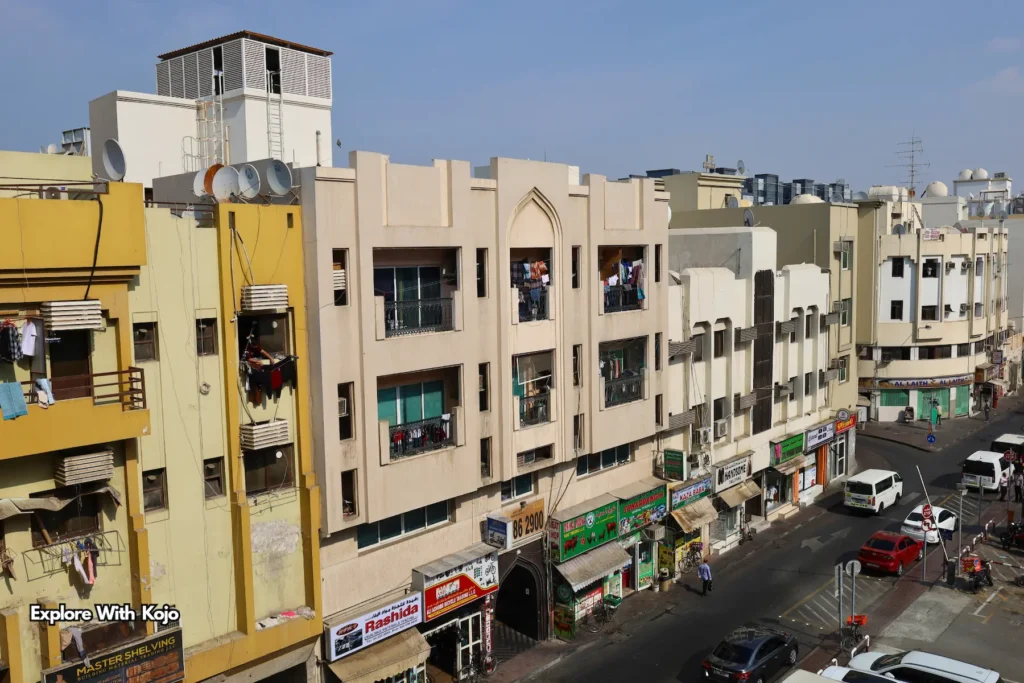
You see real life here, families, workers, the sound of clattering dishes behind small windows.
The first thing that hits you when you step into Deira is how different it feels from modern Dubai. The skyline here is made up of low-rise buildings and narrow streets. And the cars are more often than not parked tightly together. Deira is a practical place. It is also super crowded and full of stories, the kind of scene that reminds you that Dubai did not start as a city of glass and steel but as a trading town built on ambition.
Look closer and you start seeing real life. Clothes hang from balconies and air conditioners jut out of every window. The best part for me is the fact that you can hear families chatting inside these apartments. This is what I call Deira’s everyday rhythm. It is utterly raw and human. You can almost smell dinner being cooked behind those small windows.
Everyday Workers and Parking Lots
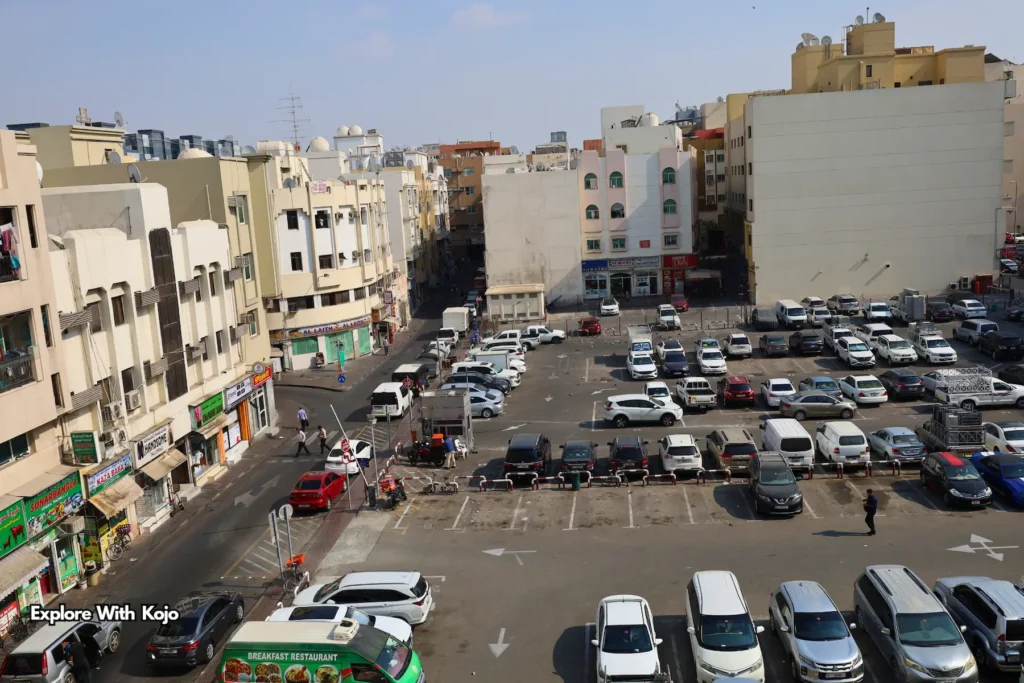
Every corner here tells a story of those who built modern Dubai but live quietly in its shadows.
A little further down, you come across one of the many open parking lots surrounded by timeworn apartment blocks. It is not glamorous, but there is something honest about it. The faded paint and quiet hum of daily life remind you that this is where the real Dubai breathes.
The buildings may be cracked and sun-faded, but trust me they are full of character. Each wall has seen decades of trade and transformation. Small grocery stores and repair stalls line the streets, simple places that have served the same customers for years. Every corner feels like a piece of living history.
The Spice Streets of Deira
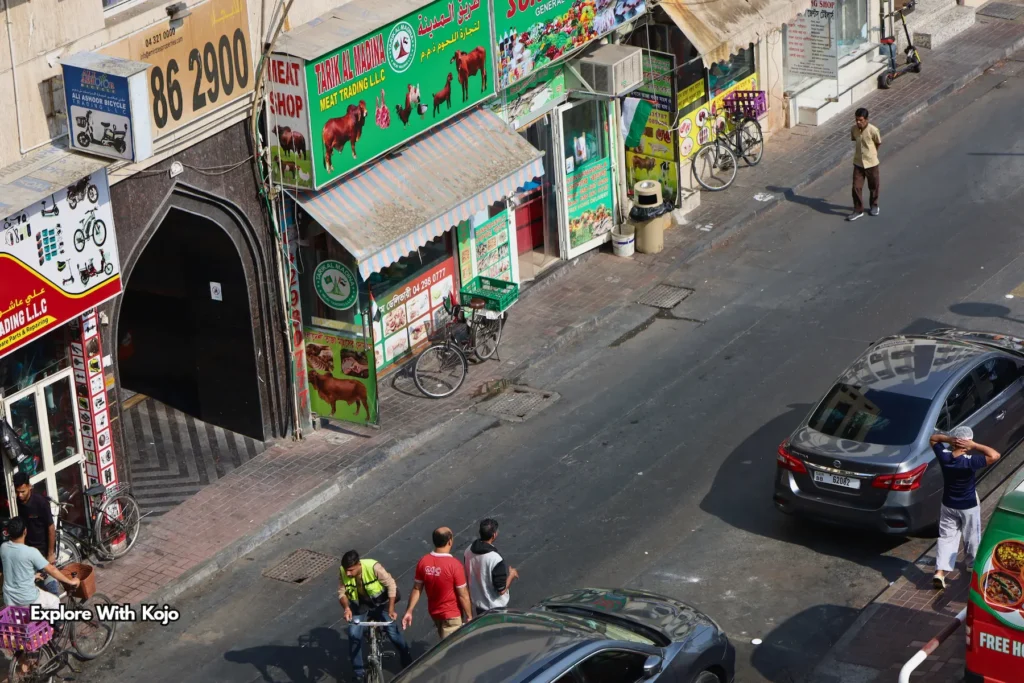
Everyday life in Deira where butchers, cyclists, and shop owners share the same narrow street.
And then suddenly, color and aroma take over. The spice shops of Deira are a world of their own, with piles of saffron and cinnamon spilling their scent into the street long before you reach the doors. The air feels heavier here, filled with the perfume of herbs and dried flowers. Shopkeepers would often greet you with smiles and gentle persuasion. However, if they notice you are a tourist, expect the energy to change quickly. They will call out, wave you over, and sometimes rush to convince you to buy their spices, teas, or souvenirs. I think it is all part of the experience.
Walk a few blocks further and you will find small meat and bicycle repair shops sharing the same tight street. Delivery riders weave through the traffic while butchers shout prices in half a dozen languages. It is noisy, crowded, and wonderfully alive, which can be best described as the truest portrait of working-class Dubai.
Where Chaos Feels Alive
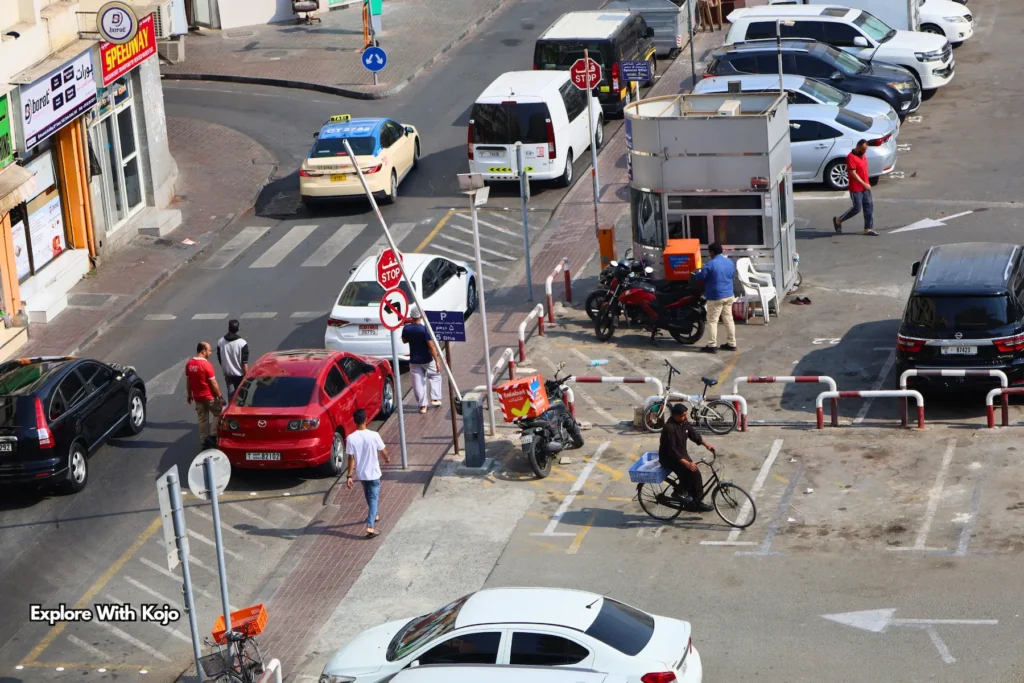
Deira’s chaos is its charm.
This is where Deira’s chaos becomes its charm. Vendors set up stalls on sidewalks, taxis honk, cyclists cut through lanes, and people cross wherever they please. There is no polished perfection here.
By afternoon, the heat rises and the pace slows down. Workers find shade near parked cars, women carry groceries home, and the whole place hums with quiet determination. Deira does not rush. It moves at its own rhythm, guided by the sun and the call to prayer.
Where Old Dubai Meets the New
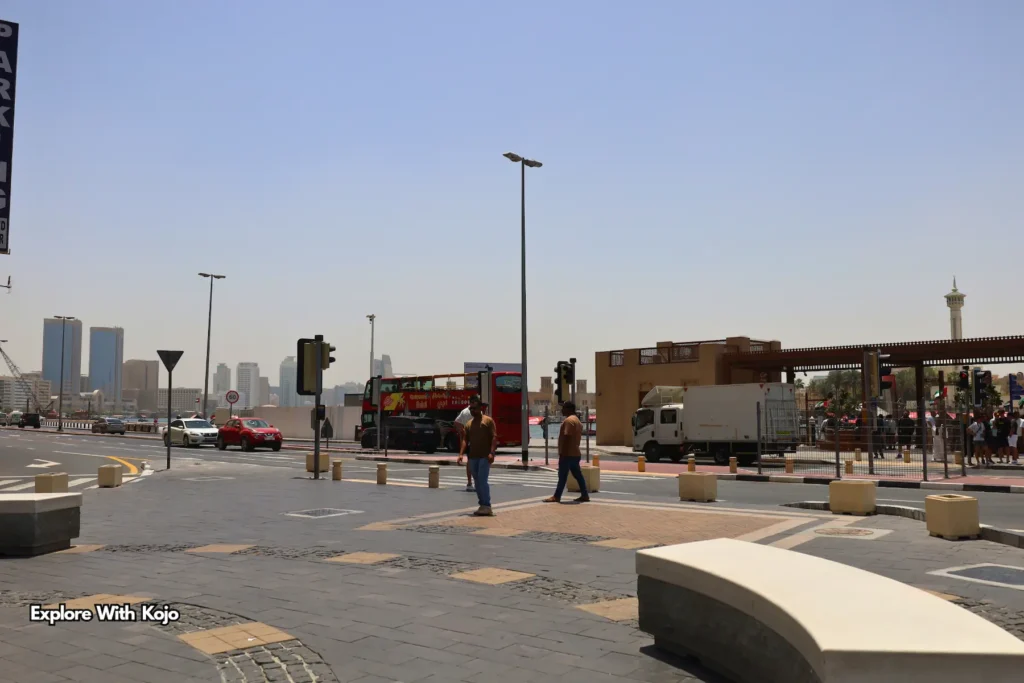
Step far enough and you see where Deira ends and modern Dubai begins, a border between eras.
At certain intersections, you can almost see where old Dubai meets the new. On one side, dusty roads and aging shops, on the other, a distant skyline of towers and glass. It is a visible line between eras, the city’s past and future sharing the same horizon.
The Call to Prayer in the Old Town
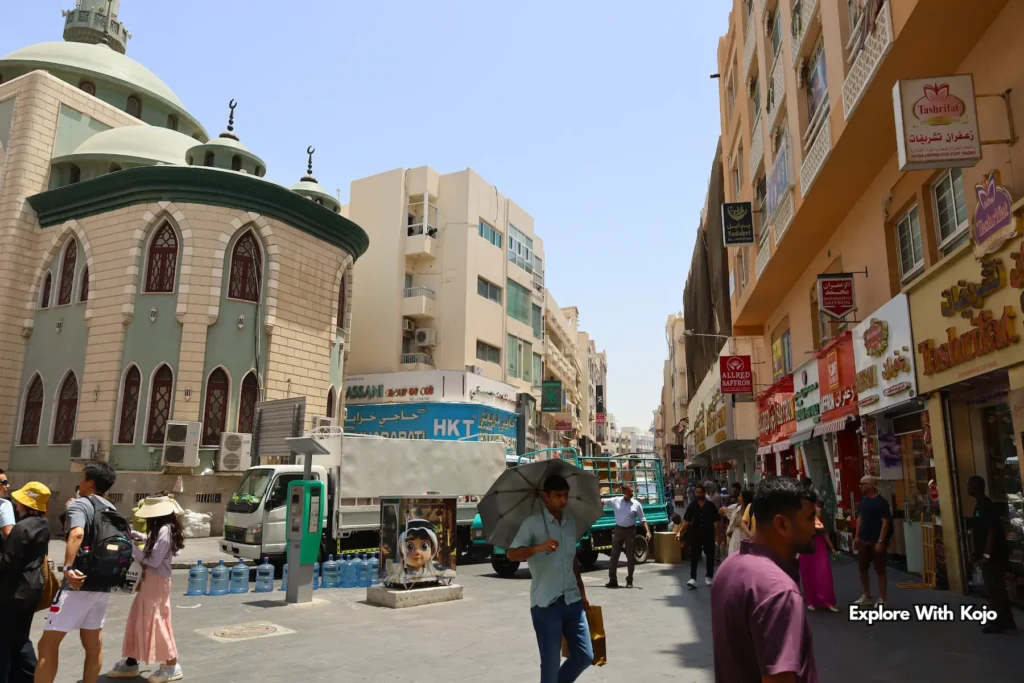
The call to prayer here sounds softer, like an echo through narrow streets.
And then, amidst the noise and heat, comes stillness, a small mosque tucked between shops. The call to prayer drifts softly through the narrow streets, echoing against buildings that have stood for generations. It is a moment of calm that reminds you what grounds this community.
Laughter and Trade on Happy Wife Street
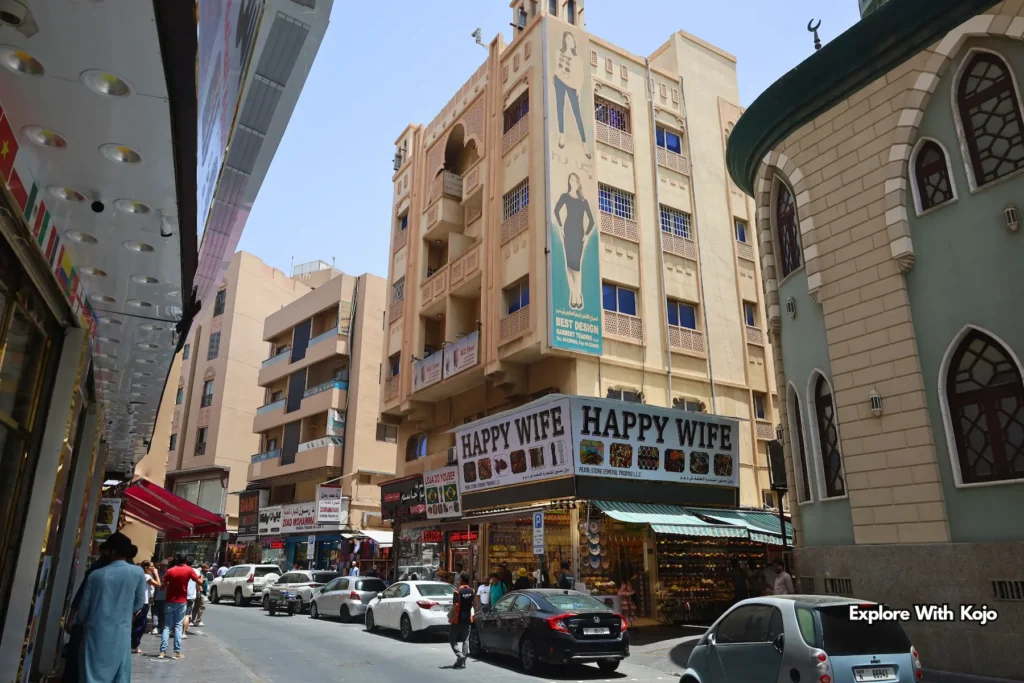
Everyday trade and tradition meet along Deira’s lively streets near the Gold Souk.
Nearby, the humor of daily life shines through. Streets lined with small businesses like the famous Happy Wife shops blend perfectly with traditional buildings and the dome of a nearby mosque. I have always wondered what kind of business Happy Wife actually does.
Toward the Gold Souk
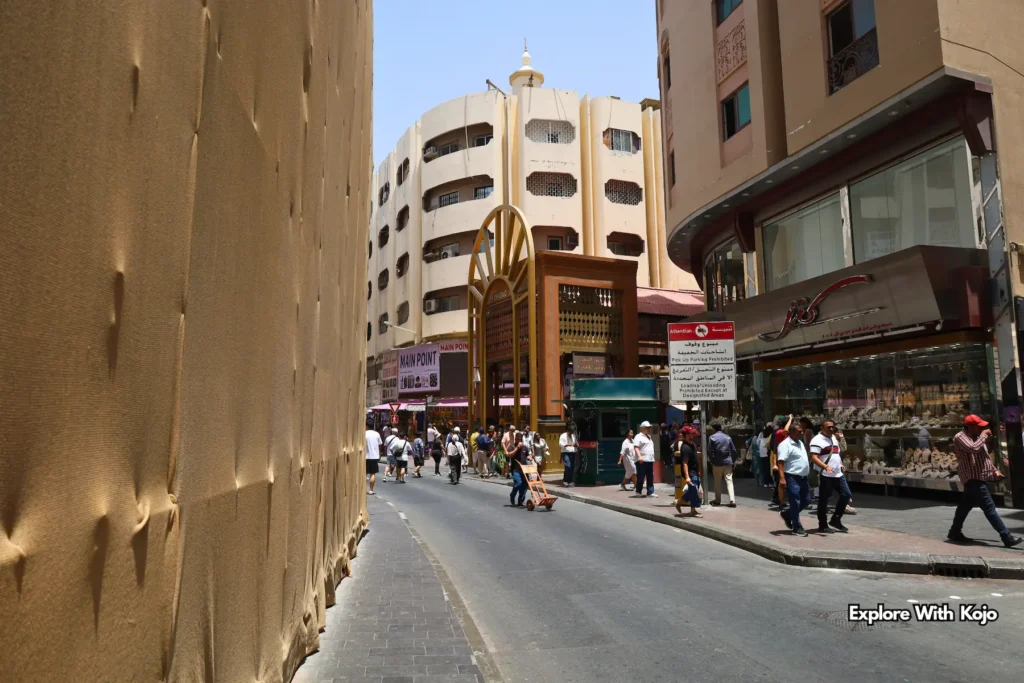
The closer you walk toward the Gold Souk, the narrower the lanes and the busier the scene becomes.
As you walk toward the Gold Souk, the lanes get narrower and the crowd thicker. The smell of incense and perfume mixes with the buzz of bargaining voices. Traders stand at shop entrances calling out deals while tourists snap photos of gold necklaces glittering in shop windows.
The Rush at the Gold Souk Gate
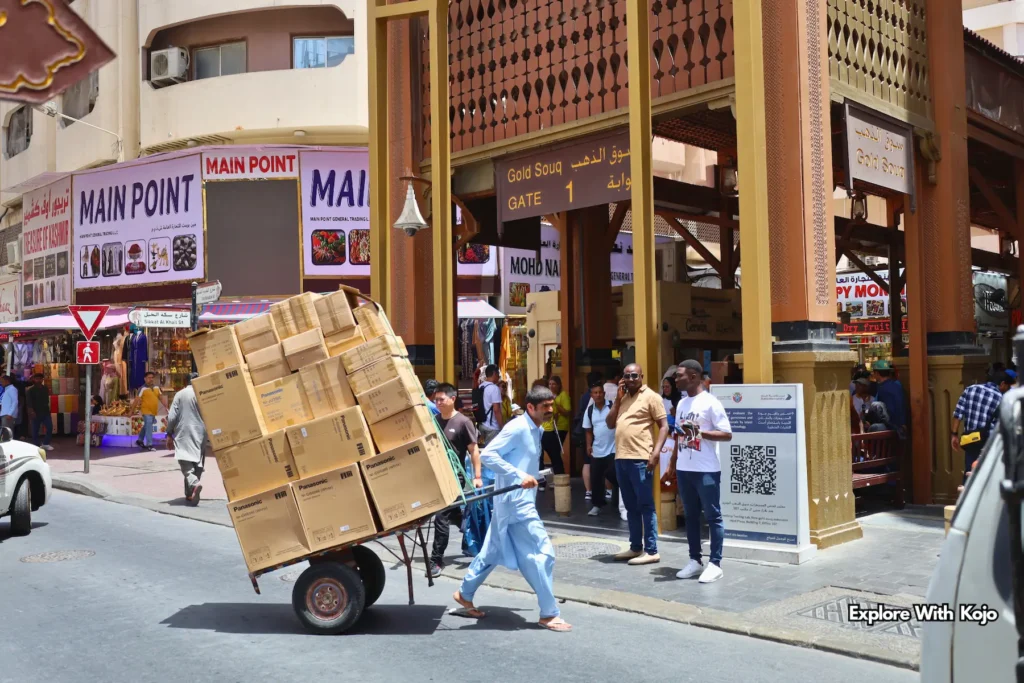
Men push trolleys of goods while visitors gather at the Gold Souk gate. This is the traditional rhythm of Deira.
At the main entrance, life reaches a crescendo. Men push heavy carts of goods, shopkeepers unload deliveries, and shoppers gather under the golden archway of Gate 1. It is what a friend of mine calls organized chaos, the kind of scene that feels timeless in a city that is always changing.
The Golden Gate of Old Dubai
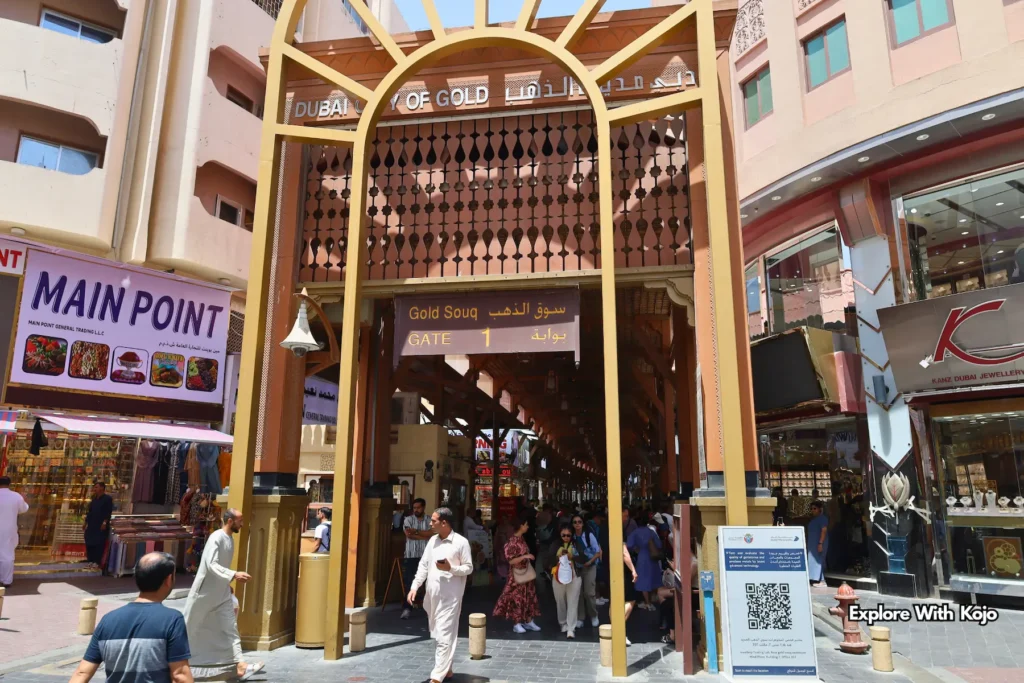
The grand wooden gate of the Gold Souk stands as a symbol of old Dubai’s enduring spirit.
Finally, you reach the Gold Souk Gate 1, its ornate wooden frame gleaming under the sun. Beyond it lies one of Dubai’s oldest and busiest markets, a place that has traded in gold and gemstones long before skyscrapers defined the skyline. Here, you realize something simple yet powerful. Deira is not just old Dubai. This area is actually the soul of Dubai.
Discover More: A Walk Through Old Dubai
If you enjoyed this walk through Deira and want to see more of Old Dubai’s timeless charm, don’t miss the video below by my colleague Maria from Explore With Kojo. In this episode titled “Dubai Old City Tour: Exploring the Rich Heritage of the Emirate,” we step off the beaten path and journey back in time to explore the heart and soul of Dubai. The video is a perfect companion to this post.