
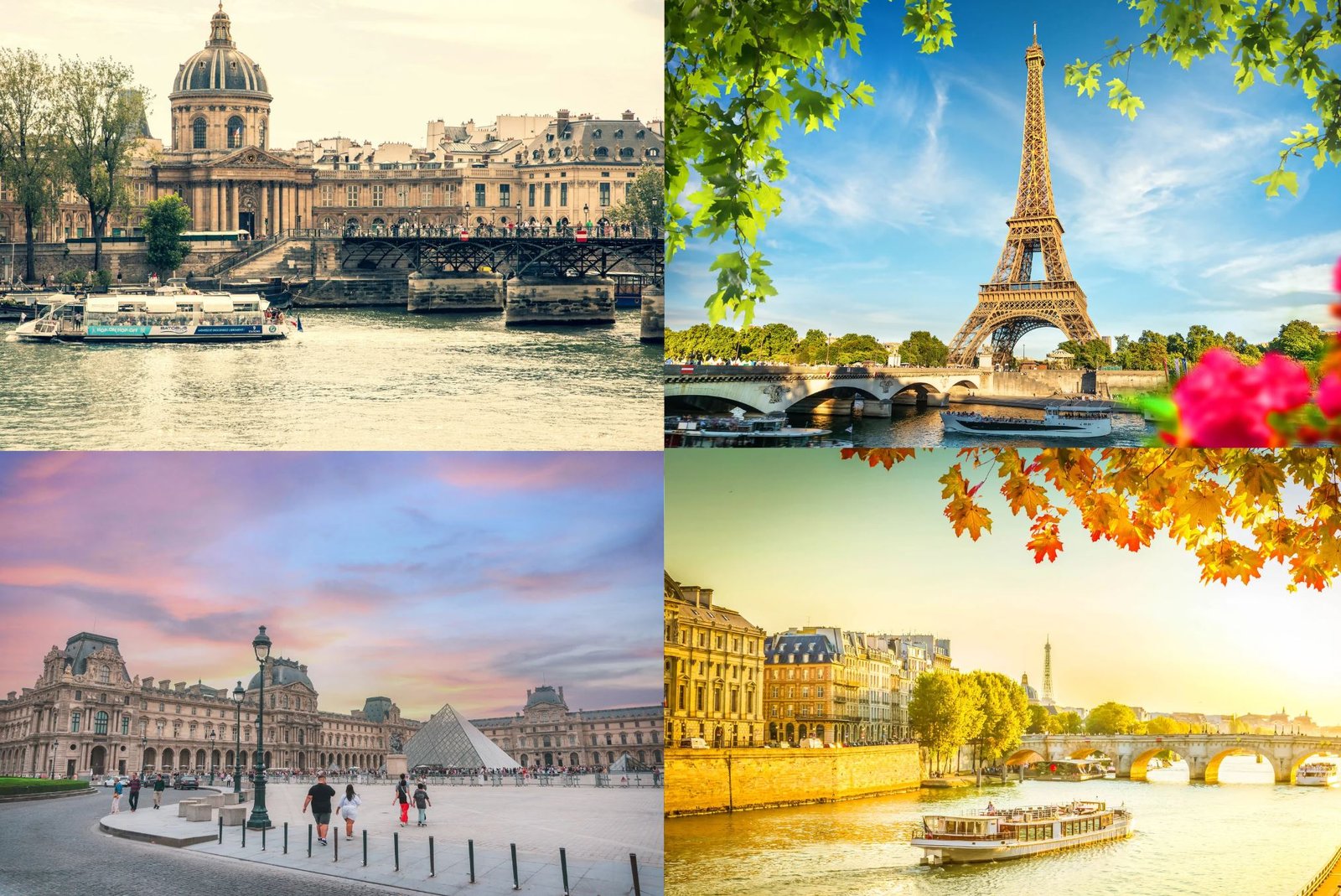
Paris Travel Guide
Basic Information
| Category | Details |
|---|---|
| Country | France |
| Continent | Europe |
| Official Language | French |
| Currency | Euro (EUR) |
| Time Zone | UTC +1 (Standard Time) |
| Driving Side | Right |
| International Dialing Code | +33 |
Travel Status
- Travel Advisory: Paris is one of the world’s safest major cities, though petty theft can occur near tourist attractions and public transport.
- Entry Points: Paris Charles de Gaulle (CDG) and Orly (ORY) airports serve most international flights. The city is also accessible via Eurostar train from London and high-speed trains from other European capitals.
Safety and Security
| Concern | Risk Level | Notes |
|---|---|---|
| Pickpocketing | Moderate | Common at metro stations, airports, and major landmarks. |
| Terrorism | Moderate | Security remains high across public areas. |
| Protests / Strikes | Moderate | Periodic demonstrations can affect transportation. |
| General Safety | High | Police presence is visible and effective. |
Health & Medical
- Water Safety: Tap water is clean and safe to drink.
- Medical Facilities: Excellent hospitals and pharmacies available throughout the city.
- Emergency Numbers:
-
Police: 17
-
Fire: 18
-
Medical / Ambulance: 15
-
EU General Emergency: 112
-
Transportation
- Metro: One of the best in the world, covering nearly every district. Buy a multi-day travel pass for convenience.
- Bus: Good coverage, especially for sightseeing.
- RER Trains: Connect central Paris with airports and suburban attractions like Versailles and Disneyland.
- Taxis and Ride-Sharing: Uber operates in Paris; official taxis display a “Taxi Parisien” sign.
- Walking: Many top attractions are within walking distance; wear comfortable shoes.
Currency and Money
| Detail | Information |
|---|---|
| Currency Code | EUR |
| Payment | Credit and debit cards are widely accepted in Paris |
| ATMs | Found across the city |
| Tipping | Service charge usually included, but rounding up the bill is appreciated |
Weather and Climate
From my experience, the weather in France changes beautifully with each season. Spring (which starts from March to May) feels fresh and romantic, with flowers blooming and people enjoying the outdoors. Summer (between June and August) is warm and full of festivals, though it’s also when most tourists arrive.
Autumn (from September to November) is my favorite time to explore because the air is cool and sightseeing feels effortless. Winter (from December to February) might be cold, but there’s something truly special about walking through cities glowing with Christmas lights and markets.
Cultural Tips
- Always greet with “Bonjour” or “Bonsoir” before speaking.
- Avoid loud behavior in restaurants and public places.
- Dining is never rushed. Parisians love to enjoy meals at a relaxed pace.
- Dress smartly; Paris is the world’s fashion capital.
- Learn a few basic French phrases since this would make interacting with locals very useful.
Quick Facts
- Nickname: The City of Light (La Ville Lumière)
- Population: Over 2 million (city proper)
- Famous For: Art, fashion, food, romance, and architecture
- UNESCO Sites: Banks of the Seine, Versailles Palace nearby
- Local Transport Pass: Paris Visite Pass (1 to 5 days for metro, bus, and RER)
Fun but Surprising Facts
- The Eiffel Tower was meant to be dismantled after 20 years but became permanent.
- Paris has over 1,800 bakeries and 400 parks.
- The city’s underground catacombs hold the remains of more than six million people.
- There’s a vineyard in Montmartre that still produces local wine.
- Paris lights up over 300 city landmarks every night.
Top Attractions to Visit in Paris
Eiffel Tower

Paris’ most famous landmark and an enduring symbol of France. Ride the elevator or climb the stairs for sweeping city views, and visit at night to see the tower sparkle every hour.
Louvre Museum

The world’s largest and most visited museum, home to the Mona Lisa, Venus de Milo, and countless masterpieces. Its glass pyramid entrance is an icon in itself.
Notre-Dame Cathedral

A Gothic masterpiece standing on the Île de la Cité. Admire its stunning façade, intricate sculptures, and breathtaking stained-glass windows that tell centuries of stories.
Champs-Élysées and Arc de Triomphe

Walk along the Champs-Élysées, one of the world’s grandest boulevards, leading to the Arc de Triomphe — a monument honoring French military heroes.
Montmartre and the Sacré-Cœur Basilica

A bohemian hilltop neighborhood once home to artists like Picasso. Climb to the white-domed Sacré-Cœur for panoramic views and explore the charming streets below.
Musée d’Orsay

Housed in a former train station, this museum features the world’s best collection of Impressionist art, including works by Monet, Renoir, and Van Gogh.
Seine River Cruise

A cruise along the Seine reveals the city’s landmarks from a new perspective. Glide under historic bridges and past the Eiffel Tower and Notre-Dame for unforgettable views.
Palace of Versailles (Day Trip)

Just a short train ride from Paris, this grand palace showcases royal luxury, with vast gardens, fountains, and the Hall of Mirrors once used by French kings and queens.
Latin Quarter

The lively student district filled with bookshops, cafés, and historic buildings near the Sorbonne University. It’s the heart of Parisian intellectual life.
Sainte-Chapelle

A hidden gem near Notre-Dame, this Gothic chapel is known for its spectacular stained-glass windows that bathe the interior in colorful light.
Frequently Asked Questions About Visiting Paris
Planning a trip to Paris can feel exciting and overwhelming at the same time. Over the years, I’ve received tons of questions from travelers about what to expect, where to go, and how to make the most of their stay. Here are some of the most common questions people ask about visiting Paris, along with my honest answers based on real experiences in the city.
1. Is Paris really as expensive as people say?
Paris can be pricey, but it depends on how you travel. If you stick to tourist traps, you’ll spend a lot. But if you explore like a local, eat at bakeries or small bistros, and stay in less touristy neighborhoods, it’s surprisingly manageable. I’ve had great meals in Paris for under 15 euros. The key is knowing where to go and avoiding the big-name spots around the Eiffel Tower.
2. When is the best time of year to visit Paris?
Spring (April to June) and fall (September to October) are the sweet spots. The weather is pleasant, the parks are alive, and the crowds are thinner than summer. Winter has its charm too, especially around Christmas when Paris lights up beautifully. I personally love visiting in late spring when you can walk everywhere without freezing or sweating.
3. How many days do I need to truly experience Paris?
I’d say at least four full days. That gives you enough time to see the major sights, enjoy a museum or two, and still have lazy afternoons sitting by the Seine. Paris isn’t just about checking places off a list. It’s about soaking up the atmosphere, people-watching at cafés, and letting the city unfold slowly.
4. Is Paris safe for tourists?
Yes, Paris is generally safe, but you have to stay alert, especially in crowded areas and near tourist attractions. Pickpocketing is the main issue. Keep your bag zipped and avoid showing off expensive gear. I’ve walked around Paris late at night without trouble, but like any big city, common sense goes a long way.
5. Do people in Paris speak English? Will I have trouble communicating?
Many Parisians speak at least basic English, especially in central areas, restaurants, and hotels. Still, I always start with a simple “Bonjour” before asking anything. A little effort goes a long way. The French appreciate politeness, and that small gesture often changes how they treat you.
6. What are the must-see attractions in Paris for first-time visitors?
You can’t miss the Eiffel Tower, the Louvre, and Notre-Dame. But I also recommend Montmartre for its charm, the Musée d’Orsay for art lovers, and a sunset walk along the Seine. If you have time, visit the Palace of Versailles for a royal day trip. Paris has layers of history, and every neighborhood has its own story.
7. How can I avoid tourist scams in Paris?
Be cautious of anyone asking you to sign petitions, especially near landmarks. Watch out for fake friendship bracelets or people pretending to find gold rings. If someone approaches you out of nowhere, just say “Non, merci” and keep walking. I’ve seen a few of these tricks myself, and they mostly target tourists who hesitate.
8. What’s the best area to stay in while visiting Paris?
For first-timers, areas like the Marais, Saint-Germain-des-Prés, or the Latin Quarter are perfect. They’re central, walkable, and filled with great cafés. If you want a local feel, Montmartre and Canal Saint-Martin are great picks. I prefer staying somewhere that’s close to a metro station, so it’s easy to move around.
9. What are some local foods I should try in Paris?
Start with a croissant or pain au chocolat in the morning, then grab a baguette sandwich for lunch. Try escargot or duck confit if you’re feeling adventurous, and don’t leave without having crème brûlée. For me, Paris isn’t just about fine dining; it’s about how simple foods taste so good here.
10. What are some cultural mistakes tourists should avoid in Paris?
Don’t be loud in public places and don’t skip greetings. Always say “Bonjour” or “Bonsoir” before speaking to someone. Avoid touching produce at markets unless you’re told it’s okay. And never assume everyone speaks English. Small courtesies make a big difference in Paris. Respect the culture, and you’ll enjoy your visit much more.
11. Is it worth visiting the Eiffel Tower or is it overrated?
It’s popular for a reason. Seeing it up close, especially at night when it sparkles every hour, feels magical. I’ve been there several times, and it still takes my breath away. That said, I’d skip the long line to go all the way to the top. The view from the Trocadéro or the rooftop of the Galeries Lafayette is just as stunning and free.
12. How much should I budget per day in Paris?
A comfortable mid-range budget is about 100 to 150 euros a day, covering food, transport, attractions, and a decent hotel. If you’re traveling smartly, you can enjoy Paris for less. I once spent around 60 euros a day by using public transport, eating at bakeries, and exploring free museums and parks.
13. What’s the best way to get from the airport to the city center?
From Charles de Gaulle Airport, you can take the RER B train directly to the city, which is the most budget-friendly option. Taxis are more convenient but pricier, costing around 50 to 60 euros. I usually take the train because it’s reliable, fast, and connects well to the metro.
14. Is Paris safe for solo female travelers?
Yes, Paris is one of the safest big cities for solo travelers, including women. I’ve met many solo female travelers there who loved the experience. Just stay alert in busy spots and avoid quiet metro stations late at night. Stick to well-lit streets, and always trust your instincts.
15. Do I need to tip in restaurants and cafes in Paris?
Tipping is not mandatory since service is usually included in the bill. Still, locals often leave a few coins or round up the total if the service was good. I personally like to leave one or two euros for great service, especially in smaller cafés where it’s appreciated.
16. How do Parisians really feel about tourists?
It depends on how tourists behave. Parisians value respect and good manners. If you’re polite, they’re usually warm and helpful. I’ve had wonderful conversations with locals just because I greeted them in French first. So if you approach Paris with humility and curiosity, you’ll be welcomed.
17. What are some romantic things to do in Paris as a couple?
Have a picnic by the Seine, take a sunset cruise, or walk hand in hand through Montmartre. The Pont Alexandre III bridge is perfect for photos, and the Luxembourg Gardens are peaceful for quiet moments together. Paris naturally creates romance. Even a simple dinner at a small bistro can feel unforgettable.
18. Can I visit Paris on a tight budget?
Yes, absolutely. Paris can be expensive, but it doesn’t have to be. Many museums offer free entry on the first Sunday of the month. You can also walk almost everywhere, buy picnic food at local markets, and stay in budget-friendly hostels or Airbnb rooms. Paris rewards creativity and curiosity more than luxury.
19. What are some off-the-beaten-path places in Paris most tourists miss?
Try Canal Saint-Martin for a local vibe, the covered passages near Grands Boulevards, or Parc des Buttes-Chaumont for peaceful walks. I also like Rue Crémieux for its colorful houses. These are the spots where you feel the real rhythm of Paris away from the crowds.
20. Is Paris a good destination for families with kids?
Yes, families love Paris. Kids enjoy the parks, river cruises, and even museums like the Natural History Museum or Cité des Sciences. Disneyland Paris is also an easy day trip. The key is mixing cultural experiences with fun ones so everyone enjoys the trip.
21. Are there any cultural mistakes tourists should avoid in Paris?
Yes, a few. Don’t forget to greet people with “Bonjour” or “Bonsoir” before speaking. Avoid speaking too loudly in restaurants or on public transport. Never assume everyone speaks English, and don’t complain about French food portions. A little politeness and cultural awareness go a long way here.
22. What should I know before visiting the Louvre Museum?
The Louvre is massive, so plan ahead. Pick a few sections you really want to see instead of trying to cover everything in one visit. Buy your ticket online to skip the long lines, and go early in the morning or late in the afternoon. I also recommend visiting on a weekday when it’s less crowded. And yes, the Mona Lisa is smaller than most people expect.
23. What’s the best way to enjoy Paris at night?
Walk along the Seine, grab dinner at a cozy bistro, or enjoy live music in Montmartre. If you want great views, head to the rooftop bars in Le Marais or the terrace at Printemps. Paris at night feels alive but calm at the same time. I often just stroll around with my camera to capture the glow of the city lights.
24. Can I drink tap water in Paris?
Yes, the tap water in Paris is safe and clean. I always refill my bottle at public fountains instead of buying bottled water. You’ll find many fountains around the city, even some with sparkling water. It’s a simple way to save money and reduce plastic waste.
25. What’s the etiquette for dining in Paris restaurants?
Take your time. In Paris, meals are meant to be enjoyed slowly. Waiters won’t rush you, so don’t expect your check right away unless you ask for it. Keep your hands visible on the table (not in your lap), and avoid splitting bills if possible. It’s also polite to say “Merci, au revoir” when leaving.
26. Are credit cards widely accepted in Paris?
Yes, most places accept major credit cards like Visa and Mastercard, though some smaller cafés or bakeries might prefer cash. I always keep a bit of cash for metro tickets, street food, or markets. Contactless payment is very common, so your card or phone will work almost everywhere.
27. What are the best day trips from Paris?
Versailles is the classic one for its palace and gardens. Giverny, where Monet lived, is perfect for art lovers. Champagne country is great for wine tasting, and Mont-Saint-Michel is unforgettable if you don’t mind the long drive. I’ve done all of these, and each offers a completely different side of France beyond Paris.
28. Is it worth visiting Paris in winter?
Yes, it’s actually beautiful in winter. The Christmas lights, window displays, and festive markets make the city feel magical. Crowds are smaller, hotels are cheaper, and you can warm up with hot chocolate at a café. I love how peaceful Paris feels when it’s cold but bright with holiday decorations.
29. How can I experience authentic Parisian culture beyond the tourist spots?
Spend time in local neighborhoods like Belleville or the 11th arrondissement. Visit open-air markets, art galleries, and small bookshops. Talk to locals, take a cooking class, or just sit at a café terrace and watch life go by. The real Paris is found in its rhythm, not just its landmarks.
30. What’s the best souvenir to bring home from Paris?
Skip the generic Eiffel Tower keychains and go for something that feels personal. A box of macarons, a bottle of French wine, handmade soap, or even a small vintage find from a flea market. I like souvenirs that remind me of how Paris felt, not just how it looked.


Pingback: France Travel Guide - Explore With Kojo