
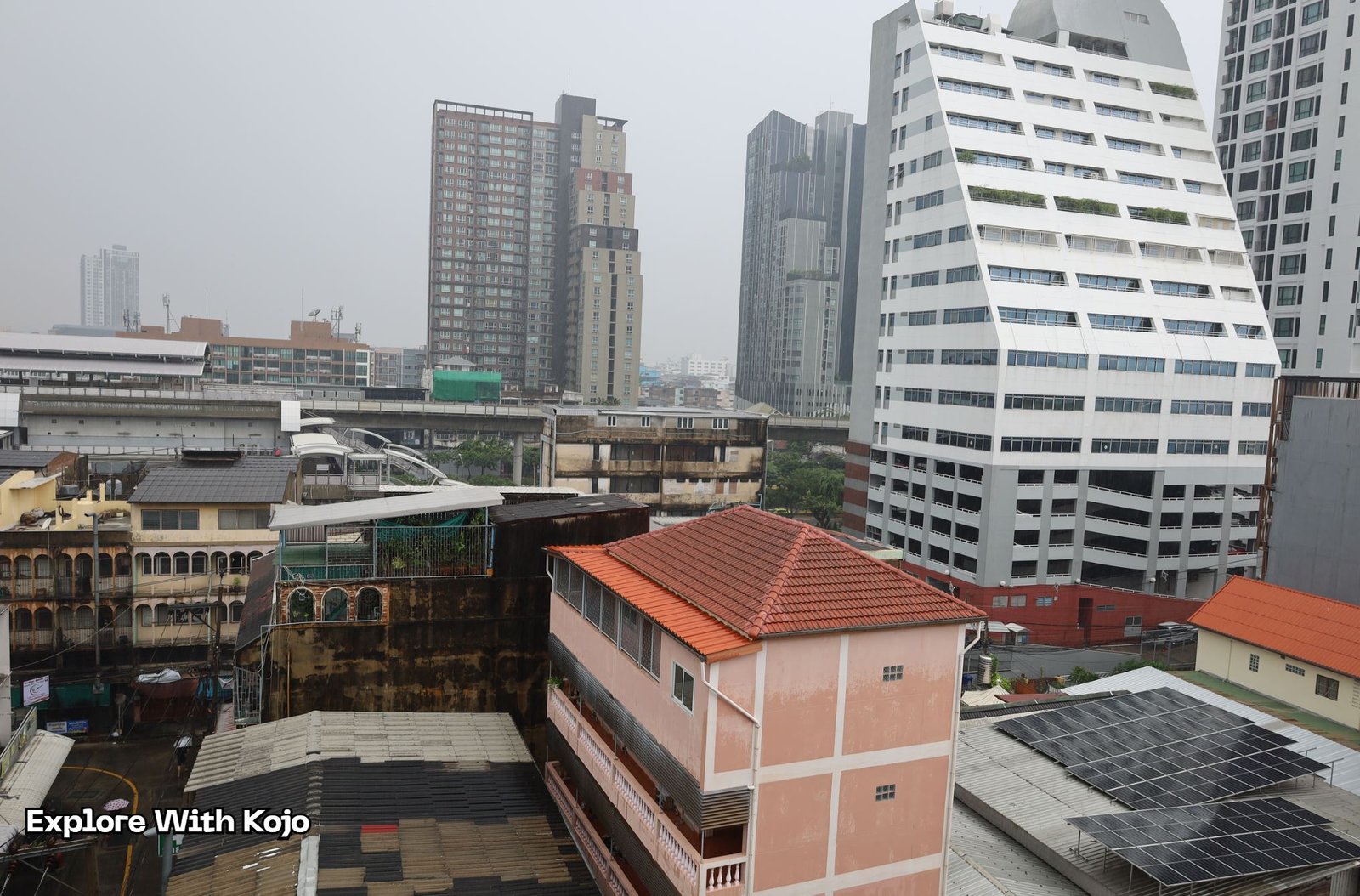
Earthquake in Thailand? What Every Tourist Should Understand Before Visiting
One question I get surprisingly often (especially from my YouTube viewers and blog readers) is about earthquakes in Thailand. I think this is not because of some sudden online panic nor because a big earthquake happened recently but simply because of where Thailand is located on the map.
When people see Thailand sitting not too far from Indonesia, Myanmar, and the Ring of Fire, their first worry is: “Kojo, does Thailand get a lot of earthquakes?”
And honestly, it’s a very fair question. Even before coming here, I had the same curiosity. So in this article, let me explain everything I’ve personally learned as a visitor exploring Thailand, and what travelers really need to know.
Why People Think Thailand Has Big Earthquakes
If you look at a map, Thailand seems close to some of the world’s most active earthquake zones:
- Indonesia
- Philippines
- Myanmar
- Japan
- The Pacific Ring of Fire
Because of this, visitors naturally assume that Thailand must also get strong earthquakes. And since I travel a lot, people often ask me:
- “Is Thailand risky?”
- “Do buildings shake?”
- “Should we worry when visiting Bangkok or Chiang Mai?”
- “Is it like Japan or Indonesia?”
The short answer is: Thailand is nowhere near as active as those countries. If you are looking for the longer answer, then keep on reading.
So… Does Thailand Get Earthquakes? (Let Me Explain This Clearly as Someone Who Is Actually Here)
Whenever people ask me if Thailand gets earthquakes, I always smile a little. Not because it is a strange question, but because it is one of the most misunderstood things about this country. The truth is very simple: Yes, Thailand can experience earthquakes, but not in the dramatic or destructive way many people imagine.
Being here, walking around Bangkok, exploring Chiang Mai, and spending time with locals has shown me a much calmer reality. Let me explain what I have learned while traveling around Thailand.

1. Most Tremors Are Tiny and Hardly Noticeable
This is the first thing that surprised me. Thailand does have occasional tremors, but they are usually so small that the average person does not feel anything. Life goes on normally. Street stalls keep selling food, the BTS keeps running, and nobody even mentions it.
Sometimes you only find out a tremor happened when you see it online afterward. Even long-term residents often say, “I have lived here for years and never felt anything”. So if you are imagining dramatic shaking like in Japan or Indonesia, that is not what happens here.
2. Strong Earthquakes Are Very Rare in Thailand
Something my travels have taught me is that different countries have different natural risks. For example:
- Japan is known for powerful earthquakes.
- Indonesia sits on the Ring of Fire.
- Taiwan experiences regular shaking.
Thailand is in a much quieter part of the region. Strong and destructive earthquakes are rare events. Thailand is considered a low-risk country when it comes to major seismic activity. Even when noticeable tremors happen, they often come from quakes in neighboring countries such as Myanmar or Laos, not from inside Thailand itself.
3. Tourists Almost Never Feel Anything at All
Many visitors assume they will experience at least one dramatic shake. But most tourists feel absolutely nothing during their entire trip. I have spoken to people who have lived in Thailand for ten, fifteen, or even twenty years, and many of them say something like: “Earthquakes in Thailand? I have never felt one.”
When a tremor is strong enough to be felt, it is usually very gentle, very quick, and noticeable only in taller buildings. It does not cause panic or danger. If you are visiting Thailand for a week, two weeks, or even a month, the chances that you will feel anything at all are very low.
Where Do Earthquakes Actually Happen in Thailand?
Not the whole country – mainly just one region.
Northern Thailand (Chiang Mai / Chiang Rai area)
This region sits closer to Myanmar and Laos, where seismic activity happens occasionally. When tremors occur, they’re usually mild and harmless.
Bangkok (Low Risk)
Bangkok is far from major fault lines. If a building here shakes slightly, it’s usually because of a quake in a neighboring country – not Thailand itself.
Phuket, Krabi, Samui (Very Low Risk)
The southern beach regions rarely experience noticeable earthquakes. So, yes Thailand is in a “neighborhood” where earthquakes can happen. But Thailand itself is not the dangerous house on the street.
Why Some People Feel Buildings Sway in Bangkok
This is the part that confuses many travelers. If there’s a small earthquake in Myanmar or a distant part of Southeast Asia, some high-rise buildings in Bangkok may sway slightly. This makes people think a major earthquake is happening.
But here’s the reality I discovered:
Modern buildings in Bangkok are designed to move gently for safety.
This is intentional. It’s the same engineering used in the following places:
- Singapore
- Hong Kong
- Dubai
- Tokyo
A flexible building is a safe building. However sometimes, visitors misinterpret normal building movement as a sign of danger.
Should Tourists Worry About Earthquakes in Thailand?

As someone who travels often (and who is physically here now) my answer is: No. You don’t need to worry at all. And here’s why:
- Destructive earthquakes are extremely rare. Thailand is not Japan or Indonesia.
- Buildings in big cities follow modern safety standards. Especially newer condos and hotels.
- Most visitors go their entire trip without feeling anything. I’ve talked to people who’ve lived in Thailand for 10 years and still say, “I’ve never felt a single quake.”
- Daily life continues peacefully. Markets are open, trains run, people are relaxed.
Thailand is still one of the safest and calmest travel destinations in Asia.
But Just in Case: Simple Safety Tips Every Traveler Should Know
Even though the risk is low, it doesn’t hurt to be informed.
- If you’re indoors, move away from windows and stay under a strong table or next to a solid wall.
- If you’re outdoors, avoid tall structures, glass buildings, or anything that can fall.
- At the beach, move inland if you ever feel strong shaking (very unlikely).
- In a high-rise hotel, expect gentle movement. Take note of the fact that that’s not danger. The swaying is a safety feature.
These are basic habits, nothing complicated.
FAQs about Earthquakes in Thailand
Is Thailand prone to earthquakes?
Thailand does experience small earthquakes, mainly in the northern region near Chiang Mai and the Myanmar border. Major destructive quakes are rare.
Is Bangkok at risk from earthquakes?
Bangkok is far from the main fault lines. When buildings sway, it’s usually because of distant quakes in neighboring countries, not Thailand itself.
Do travelers need to worry about earthquakes in Thailand?
Not really. Thailand is considered low-risk, and daily life remains completely normal for tourists after mild tremors.
Why do tall buildings shake during small earthquakes?
Modern skyscrapers in Thailand, Singapore, Dubai, and Japan are designed to sway gently to absorb shock. It’s a safety feature, not a danger.
Should I cancel my trip to Thailand after an earthquake?
No. Travelers rarely face disruption, and Thailand remains one of the safest tourist destinations in Asia.


