
If you ask ten people where to find the best street food in Bangkok, they will all give you different answers. And to be honest, they are not wrong. In Bangkok, great food is almost everywhere. You can walk 100 or 200 meters from wherever you are in the city and stumble on something delicious. Markets, alleys, footpaths, food courts and night streets all have something worth trying.

But even with all of that, there is one place that rises above the rest for me. Chinatown in the evening. To be specific Yaowarat Road. Actually Yaowarat Road is one of the top places you must visit when you find yourself in Bangkok.

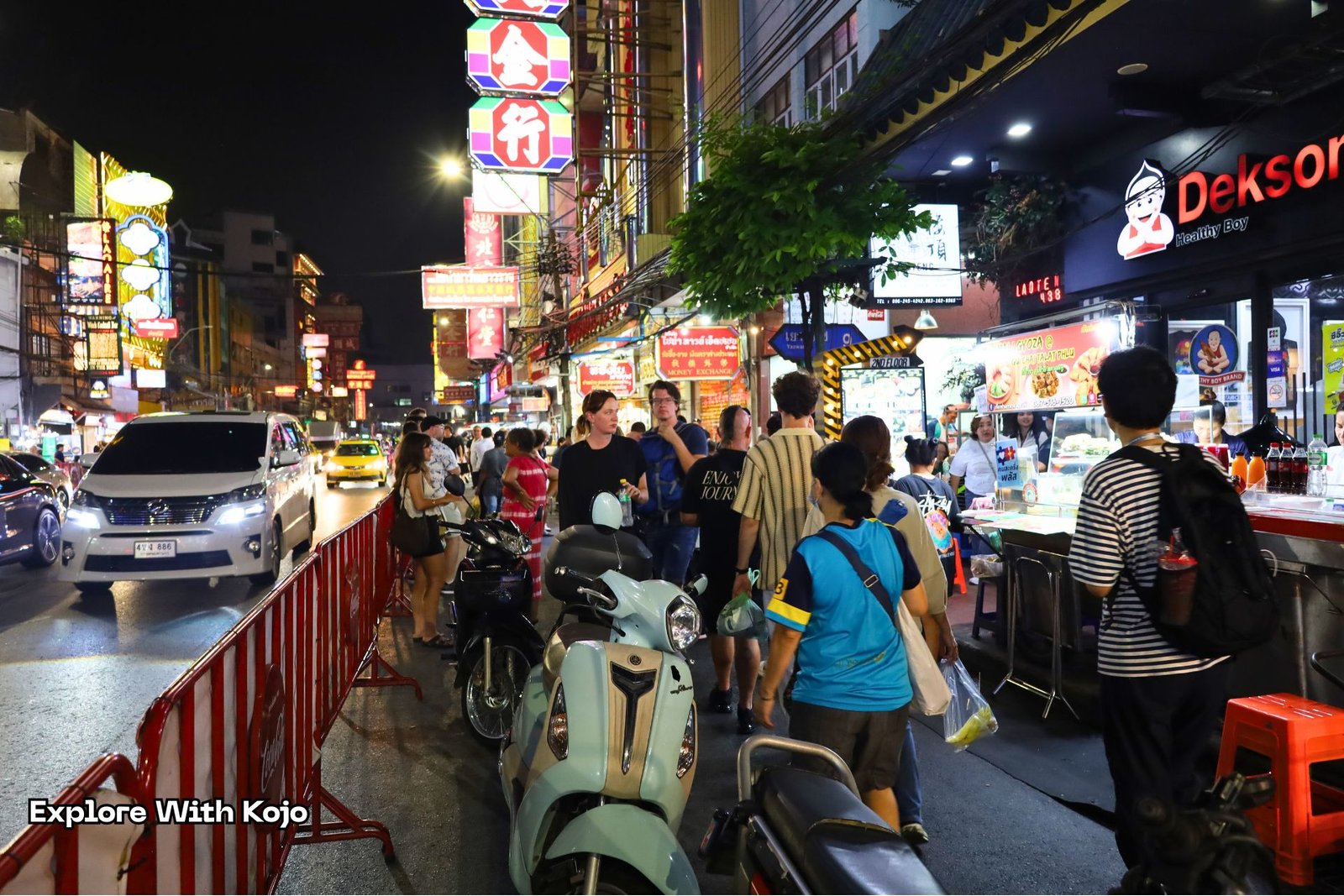
This is the heart, soul and stomach of Bangkok’s street food culture. The first time I visited at night, I understood immediately why people talk about it with so much excitement. The neon lights glow above you, long queues form in every direction and smoke rises from the woks like a signal calling you deeper into the street. Vendors shout out orders with confidence, and the sound of hot oil sizzling never stops. Walking through Yaowarat feels like entering a world where everything revolves around food and nothing else matters.

This is my honest guide to Chinatown and why I believe it is the number one street food destination in Bangkok.

Street food signs on Yaowarat Road marking the start of Chinatown’s night food market.

Why Chinatown Beats Every Other Street Food Spot

The variety here is on another level. Bangkok has good food everywhere, and I mean everywhere. You can walk a short distance in any neighborhood and find something worth eating. But Chinatown is different. It is the only place where every type of street food you can imagine sits on one single road, all competing for your attention at the same time.

In one walk down Yaowarat, you can find:

  • Flame grilled seafood still smoking from the grill
  • Fresh dim sum stacked in steaming bamboo baskets
  • Sweet traditional Thai desserts glowing under warm lights
  • Classic Thai dishes made right on the footpath
  • Chinese Thai fusion plates with rich sauces
  • Cold coconut ice cream that saves you from the heat
  • Duck noodles with broth so flavorful you smell it before you see it
  • Bird’s nest soup served like a delicacy
  • Roasted chestnuts spinning in giant metal drums
  • Fried dough sticks that people grab by the dozen
  • Pad Thai cooked in giant pans
  • Every mango based treat you can think of
  • Bubble tea stalls on every corner
  • Even Michelin recognized street stalls hidden in the crowd

Chinatown hits you with options from every side. It is impossible to leave hungry. The real challenge is stopping yourself from buying everything you see. Every smell pulls you in, every stall looks tempting and every dish feels like a small adventure.

Some of Bangkok’s Most Famous Food Stalls Are Here


One thing you quickly notice in Chinatown is that many of these stalls are not new. Some families have been cooking on Yaowarat Road for over 40 years. Their recipes are older than most of the tourists walking through the street. These food vendors are generational cooks who have mastered their dishes through decades of practice.

You also find stalls proudly displaying their Michelin Bib Gourmand signs. And no, this is not marketing. These stalls earned that recognition the hard way. When I arrived at some of them, I saw locals patiently waiting in line for almost an hour. For Bangkok locals to wait that long at a street food stall tells you everything you need to know.

What I Recommend Eating in Chinatown 

Small makeshift street food stall in Bangkok Chinatown serving fresh meals.


These are dishes I personally tried, enjoyed and would confidently recommend to anyone visiting Yaowarat for the first time. If you follow this list, trust me, you will eat very well.

1. Grilled Seafood

The grilled seafood in Chinatown is unbeatable. You can literally watch the prawns, squid and fish cooking right in front of you on open flames. The smell hits you before you even reach the stall. It is smoky, salty and slightly sweet at the same time. I always tell people that if you love seafood, Chinatown is where you should start your night.

2. Mango Sticky Rice

I ate mango sticky rice all over Bangkok, but Chinatown’s version had something extra. The mango was incredibly sweet, the rice was soft and warm, and the coconut sauce tasted richer than usual. It feels like dessert and comfort food at the same time. If you ever want to understand why mango sticky rice is loved around the world, Yaowarat is the perfect place to try it.

3. Dim Sum and Dumplings

Chinatown takes dim sum to another level. The dumplings are steamed fresh, filled generously and always full of flavor. Pork dumplings, shrimp dumplings, vegetable dumplings, soup dumplings… they are all good. Some stalls have been serving the same recipes for decades, and you can taste that experience in every bite.

Dumplings being pushed in a cart for sale along Yaowarat Road in Bangkok Chinatown.

4. Duck Noodles

The duck noodles here are unforgettable. Soft noodles, rich broth and slices of duck that are tender and full of flavor. It is one of the dishes that reminds you how deeply Chinese culture has influenced Bangkok’s food scene. If you want something warm and comforting after all the walking, this dish is perfect.

5. Chinese Desserts

Chinatown is full of Chinese-style desserts you might not see in other parts of Bangkok. Sesame balls with sweet fillings, herbal jelly that tastes refreshing in the heat, and even warm sweet soups. They may look simple, but the flavors stay with you long after you leave.

6. Pad Thai (Chinatown Version)

Pad Thai in Chinatown tastes different from the one you get in regular tourist areas. It is richer, smokier and sometimes has a little extra sweetness. The portions are generous and the flavors are bold. If you think you already know Pad Thai, try the Chinatown version and prepare to be surprised.

Tips for Enjoying Chinatown Street Food (From Someone Who Has Been There Many Times)

Kojo standing on Yaowarat Road surrounded by Chinatown’s famous night street food scene.

1. Go at Night

Chinatown during the day is fine, but at night it becomes something completely different. The neon signs light up, the crowds grow, and new food stalls appear out of nowhere. If you want the full Yaowarat experience, go after sunset when the street feels alive and every corner smells like something delicious.

2. Carry Cash

Most vendors accept cash only, especially the smaller stalls. You do not want to spot the perfect dish and then realize you cannot pay for it. Bring small bills so you do not hold up the line.

3. Wear Comfortable Shoes

You will walk a lot. Yaowarat Road is long, and you will move back and forth between stalls, side streets and food carts. Comfortable shoes are your best friend here.

4. Follow the Queues

The longest queues usually lead to the best food. Locals know exactly where the good stalls are. If you see a line stretching down the street, do not ignore it. There is a reason people are waiting.

5. Eat Slowly

Chinatown is not the type of place you rush through. Try one dish, walk around, then try another. Let your senses guide you. The fun is in discovering things as you go.

How to Get to Chinatown

The easiest and most convenient route is the MRT to Wat Mangkon Station. From the station, it is only a short walk to Yaowarat Road.

If you consider taking a taxi, avoid rush hour. Chinatown’s roads get packed, and you might spend more time sitting in traffic than eating. The MRT is stress-free and drops you exactly where you need to be.

Do You Need to Tip Street Food Vendors in Bangkok? 

One of the most common questions I get is about tipping at Bangkok’s street food stalls. After eating all over the city, here is my honest and simple answer.

And the answer is a big NO. You are not required to tip street food vendors in Bangkok. Street food is already very affordable, and the vendors do not expect a tip the way restaurants might. But here is what I personally do.

If the food is amazing and the vendor was kind, I leave a small tip.

Not because it is expected, but because it feels good to support the people who work long hours over a hot wok to make the food we enjoy. A small tip can be:

  • 5 baht
  • 10 baht
  • 20 baht

Even 20 baht can mean something to a vendor selling skewers for 10 baht each. It is not about the amount, but the gesture.

When I tip street food vendors

Fresh durian displayed at a Chinatown stall on Yaowarat Road.

From my own experience in Chinatown, I usually tip when:

  • The food is great and freshly made
  • The vendor is friendly and they help you choose dishes
  • They prepare something with extra care

For example, if someone grills prawns beautifully or serves mango sticky rice with a smile, I give a little extra.

When I don’t tip

I do not tip when:

  • The vendor is very busy and cannot even take the money
  • The food is pre-packed and the interaction is extremely quick
  • There’s a ton of crowd and chaos in the stall. The stall is already crowded and chaotic

Take note of the fact that tipping in street food culture is not an obligation. No vendor expects you to leave them a tip. Actually in Thailand, tipping isn’t compulsory. It is simply a way to show appreciation.

Traveler. Storyteller. Curious about how people live around the world. I created Explore With Kojo to share real stories from the places I visit and to inspire smart, honest travel.