
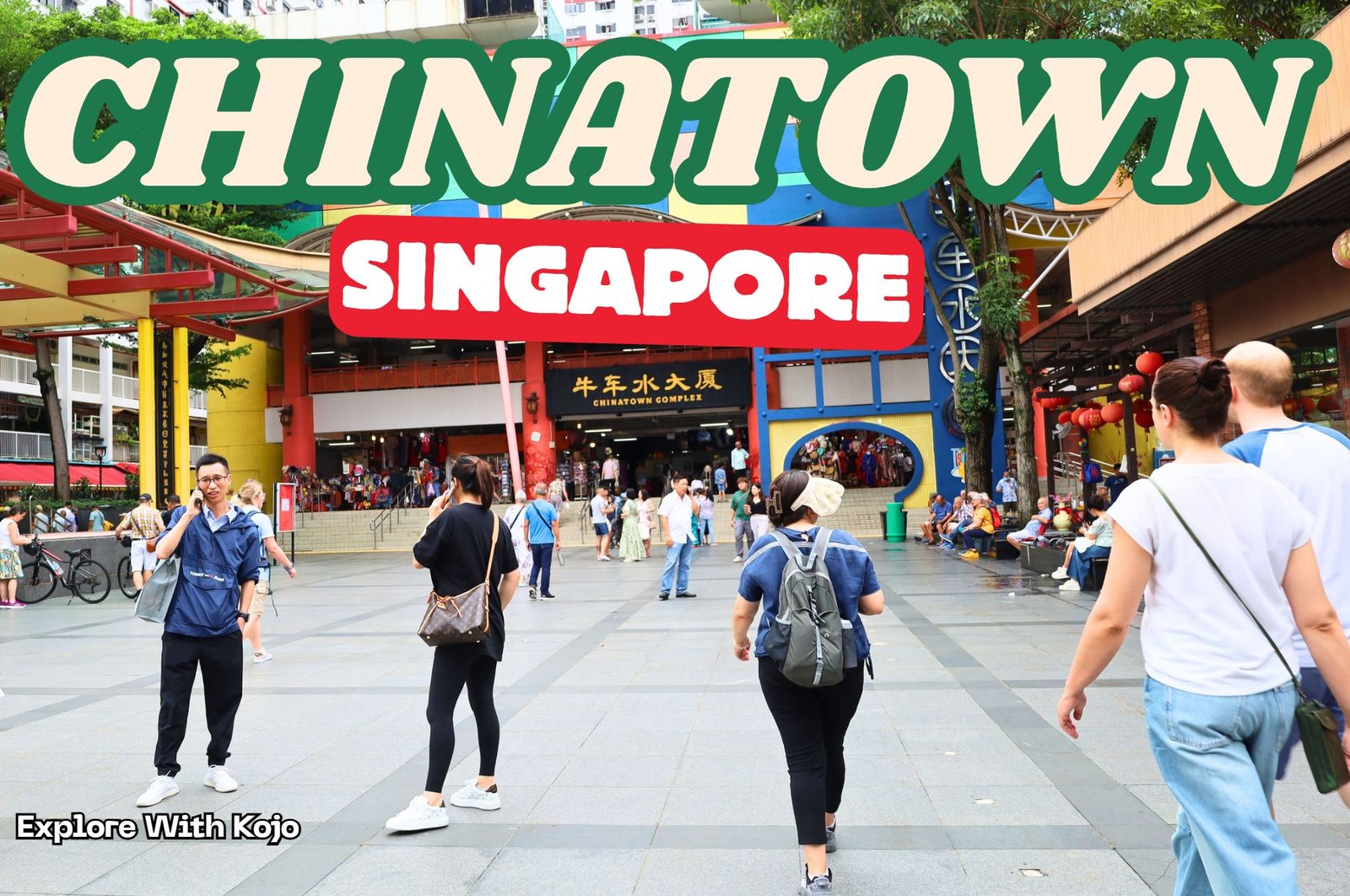
Things to Do in Singapore’s Chinatown: What Not to Miss
You probably already know that Singapore is a country full of premiere attractions. And in some particular parts of the Lion City, a bunch of them tend to be grouped together. One such area is Chinatown, which is easily accessible from the Marina Bay and other parts of the island. Chinatown is well-beloved by tourists and locals alike due to the variety of edifying experiences it has to offer. And below are the top places we recommend you visit in the locality not only for your own personal pleasure but also to get a better understanding of Singapore and Southeast Asia in general.
NUS Baba House
The Baba House is one of the main historical sites you will find in Chinatown. The building is maintained by the National University of Singapore (NUS) and currently serves as a museum.
The Baba House stands as one of most-impressive displays of traditional Peranakan culture. There Peranakans were basically Chinese migrants who settled in places like Singapore. This particular home was once owned by a 18th century shipping tycoon named Wee Bin, and it actually remained in his family for six generations. As such many of the household items that the family possessed were left intact by NUS for your perusal. In other words visiting Baba House is almost like being transported into yesteryear and helps show how living in urban Singapore was back in the day.
Chinatown Street Market

Those who are familiar with ‘Chinatowns’ around the world know that they tend to be good places to shop. And perhaps the best way to describe Singapore’s Chinatown Street Market is like one of those bustling, seemingly-disorganized retail areas you see in Western movies when the protagonist visits a foreign country.
But things are very much in order in Chinatown. And outside of its vibrant colorfulness, which makes it a site to behold in and of itself, more to the point of its intended purpose is that it is a wonderful shopping area where just about every item you can think of is available. And of course, once again as with any Chinatown, there is the delicious Chinese fast food.
But going back to retail experience, perhaps the Street Market isn’t the very best place to purchase high-quality goods in Chinatown. But for trinkets, souvenirs and other smaller items, you’re bound to find something which appeals to your tastes that isn’t going to cost you a wad of dough. And being that this is an informal economic setting, there’s always to opportunity to bargain and get a better deal than what is initially offered.
Thian Hock Keng Temple
Another site you may want to visit for cultural reasons is Thian Hock Keng Temple (aka Temple of Heavenly Happiness). Yes, it is actually of Chinese origin, as it was originally erected as a religious institution whereas Chinese immigrants praised their particular deities. In fact it used to stand at the coast so that such people who successfully made the voyage to Singapore could promptly pay the aforementioned tributes.
But considering how much China has influenced the Lion City in general, it is also part of the historical heritage of Singapore itself. In fact the Thian Hock Keng Temple is said to be the oldest Chinese temple on the island. And even if you don’t particularly care for its history, you’ll still be taken aback by its striking architecture, which looks like one of those Shaolin temples you’d see in an old kung-fu flick. And the most amazing thing about it, at least in my opinion, is that the Thian Hock Keng Temple is said to have been built without the utilization of any nails. So it basically stands as an architectural marvel from centuries past.
Buddha Tooth Relic Temple

Buddhism is the religion that most people actually associate with China. And accordingly, there is the showy Buddha Tooth Temple located in Chinatown. In fact outside of the shopping areas, this is perhaps the most-famous site in the neighborhood.
The Buddha Tooth Relic Temple is extraordinary to behold, both externally and internally. It derives its name from the idea that it actually houses one of Buddha’s teeth, which is considered a sacred artifact amongst devotees. And accordingly the inner chamber in which it is housed is only accessible to monks, though the relic itself can still be viewed by the visiting public. Also, the Temple holds services for adherents or spectators of Buddhism.
Al-Abrar Mosque & Chinese Methodist Church
Visitors who may belong to different religious groups should not be intimidated from visiting Chinatown due to the religio-cultural sites mentioned above, since the area is very up-to-date in terms of global trends. As such if you do feel like witnessing how other religions are practiced in Singapore, you may want to take a trip to the Al-Abrar Mosque and/or the Chinese Methodist Church, which are also situate in Chinatown. And if you are a devote adherent to Islam or Christianity, you can even attend these institutions for worship services. But outside of that, as you have probably already guessed from the flow of this article, these are sites to behold in and of themselves. And even outside of these facilities, there are a number of other religious institutions which practitioners can visit in Chinatown.
Eu Yan Sang Medical Hall
One of the main things that attract visitors to countries like Singapore is its well-known modernity. But many a tourist also like to get a taste of the traditional side of that part of the globe. And if you’re the type who is intrigued by old school methods of dealing with health issues, then the Eu Yan Sang Medical Hall is a must-see attraction.
This institution is very much active and equipped. That means there are thousands of herbs and other eccentric indigenous remedies visitors can actually purchase while there, such as an impressive array of herbs and teas. And remember when I made that reference earlier to movies where a foreigner visits some market in an exotic part of the world and is greeted by peculiar goods? Don’t even go there.
Moreover considering that this is indeed a medical hall, you can actually visit the Eu Yan Sang Medical Hall for healthcare advise and treatment. And whereas it may not necessarily be a good idea to do anything hardcore there medical-wise, you can once again enjoy traditional remedies such as acupuncture.
Maxwell Food Centre

One of the main reasons many people travel is to experience the foods of different cultures. And if you’re interested in foods specific to Southeast Asia, you’d definitely want to hit up the Maxwell Food Centre. This is not only due to the vast variety of dishes available at this Chinatown location but also their general affordability.
That means that many of the meals on hand are fast-food oriented, but a lot of them are also really healthy, especially by Western standards. Also, despite its multi-cultural influence, the Maxwell Food Centre is actually a good place to become intimately immersed in the Singaporean culture. But that being said, this locale is considered perhaps the best all-around place for food in the Lion City.
Keong Saik Road
Like many other prominent areas in Chinatown, Keong Saik Road has a history dating back almost a century now. In days past it was one of the seedier parts of the Lion City. But due to conservation efforts and urban redevelopment, the street is now actually quite scenic and houses some fashionable boutiques, art galleries and eateries. In other words Keong Saik Road is a cool place to hangout. In fact it is considered by many to be amongst the top tourist attractions on the entire Asian continent and is one of the prominent gems nestled in Chinatown.
Sri Mariamman Temple

In addition to the places mentioned above, another cool site to visit while in Chinatown is the Sri Mariamman Temple. This is the oldest of all the locations we’ve thus far discussed (in addition to being the oldest Hindu temple in Singapore), as it can actually trace its origins back to the early 19th century.
Hinduism, as you probably already know, is also amongst the prominent religions practiced in the Lion City. Thus visiting the Sri Mariamman Temple will give a sound glimpse into the foundations of this belief system, since it is now on the verge of fulfilling two centuries of being a center for Singaporean Hindus.
And in terms of its physical appeal, it is probably the most-colorful manmade structure in the country that doesn’t rely on electric lights to achieve its attractiveness. That is to say that this is quite a sight to behold. In fact no disrespect to the Hindu religion, but it kind of looks like a tower of giant, vibrant action figures from the outside, and the inside is accordingly pimped out. Indeed the Temple is considered to be a national monument in Singapore. So besides performing its basic spiritual functions, it is also deemed to be one of the Lion City’s premiere tourist attractions which draws admirers from all across the globe.


