
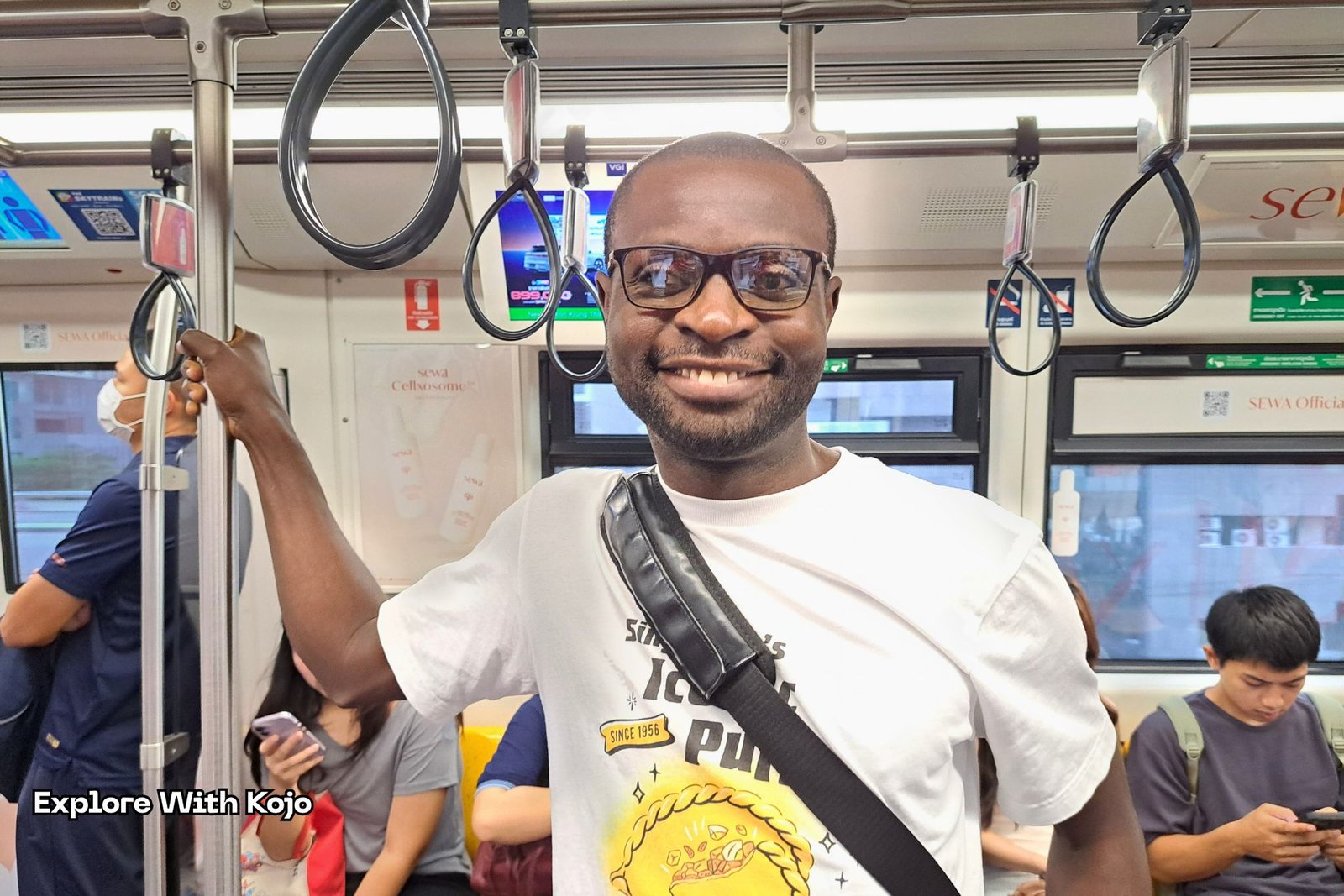
Does Bangkok Have a Metro? A Complete Guide to the BTS, MRT, and Airport Rail Link
Before my first trip to Bangkok, I kept seeing the same question online everywhere – from Reddit threads to travel forums to YouTube comments:
“Does Bangkok actually have a metro?”
Honestly, I was curious too. When most people think of Bangkok, they imagine the traffic, the motorbikes, the food stalls, the tuk-tuks weaving through the streets. It doesn’t exactly match the picture of a modern metro city like Singapore or Dubai. So I came with an open mind, not expecting much.
But the short answer is yes, Bangkok definitely has a metro. And not just one system. There are actually three of them and they are as follows:
- BTS Skytrain (the elevated metro floating above the roads)
- MRT Subway (the underground system)
- Airport Rail Link (connecting the airport to the city)
Together, these systems make moving around Bangkok incredibly easy, even if it’s your first time visiting. In fact, they changed the way I saw the city completely.
Because here’s the truth: Bangkok might look chaotic when you’re on the ground. Cars are honking and there are street vendors everywhere and of course buses squeezing past each other. However, the moment you step onto the metro platforms, it’s like entering a different Bangkok entirely. Suddenly, everything becomes calmer, cooler, cleaner, and faster. The trains arrive on time, the platforms feel organized, and the whole system just works.
I didn’t expect to like it this much, but I genuinely enjoyed using it. So let me take you through my honest experience as a first-time rider navigating Bangkok’s metro system.
What Is the BTS Skytrain? (Bangkok’s Most Popular Metro System)

Bangkok’s BTS Skytrain is the heart of the city’s public transport system, and honestly, it’s probably the first thing you’ll notice when you step outside in many parts of the city. The tracks glide above the streets like a giant concrete spine, connecting malls, offices, hotels, and entire neighborhoods. If you’ve ever seen photos of trains floating between skyscrapers that’s the BTS.
What makes it special is how practical it is. Bangkok’s traffic can be brutal, especially during peak hours, but the Skytrain just sails above all the chaos. No noise nor honking. You also don’t have to deal with fumes. What you get are clean platforms, air-conditioned trains, and predictable travel times. It’s fast, easy to understand, and from my own personal experience it is extremely tourist-friendly with English signs and clear maps at every station.
Out of all the transport options in Bangkok, the BTS became my go-to. Whether I was heading to a mall, crossing town for food, or simply exploring, the Skytrain made everything smoother and stress-free. It might not look glamorous from the outside, but once you get inside, it’s efficient and modern -exactly what every traveler needs in a city this busy.
Watching the BTS From My Hotel Window
One of my favorite things was how you could actually see the trains pass by from many hotels in the city. It gives you a sense of how integrated this metro is with daily life.

Caught this BTS train passing right outside my hotel window. In Bangkok, the metro is truly part of the skyline.
Buying Tickets: Using the One-Day Pass and Single-Trip Cards
Bangkok’s BTS system is extremely ticket-friendly, especially for visitors like me who are just trying to move around without stress. You’ll find several options at every station, and everything is very easy to understand even if it’s your first time using the metro in Thailand.
You can buy:
- A single-trip ticket, perfect if you only need to move from one station to another.
- A stored-value Rabbit Card, which works just like Singapore’s EZ-Link card or London’s Oyster, and is great if you’ll be staying in Bangkok longer.
- A One-Day Pass, which gives you unlimited rides for the whole day.

Since I knew I’d be hopping around the city filming, exploring, and changing trains several times, the One-Day Pass made the most sense. I wanted the freedom to jump on and off the BTS without thinking about fares. So I walked up to the machine, tapped through the simple menu, and bought my pass, which cost 150 Baht.
Honestly, the whole process took less than a minute and as soon as I held the card in my hand, I finally felt like I was doing Bangkok “the local way”.

This is the BTS Skytrain ticket machine used to buy single-trip cards.
Inside the BTS Station: My First Real Look at the System
Walking into my first BTS station (Wongwian Yai) honestly felt like stepping into a small, well-run airport terminal. Everything looked organized. The platforms were wide and the floors were clean. The signs were also so clear that even a first-time visitor like me didn’t have to stop and ask for directions.
What surprised me most was how calm everything was. Every few seconds, an announcement came through the speakers (in both Thai and English) telling you where the next train was heading and how long you had to wait. And the safety barriers along the edge of the platform gave me even more confidence, especially since this was my first time riding Bangkok’s elevated metro.

I remember standing there for a moment, just observing everything. The advertisements flashing across the screens, the sound of trains arriving from both directions, and the mix of locals and tourists waiting patiently. It was my first real look at the BTS system, and I instantly understood why so many travelers say Bangkok is easier to move around than people think.
You know that moment when you travel somewhere new and you just have to capture it? Yes, I had mine.

The Tourist Moment: Posing With My BTS Card
How Many Metro Systems Does Bangkok Have?
Bangkok actually has three major systems working together:
1. BTS Skytrain (Elevated)
- Best for tourists
- Connects major attractions like Siam, Nana, Asok, Mo Chit, and Silom
- Air-conditioned, clean, modern
2. MRT Subway (Underground)
- Runs deep under the city
- Connects business districts and newer areas
- Cleaner and less crowded than the BTS
3. Airport Rail Link (ARL)
- Connects Suvarnabhumi Airport to the city
- Cheap alternative to taxis
All systems use:
- Electronic gates
- English menu screens
- Clear maps
- Announcements in both Thai and English

Is Bangkok’s Metro Safe?
It is absolutely safe! And I don’t say that lightly. I’ve used public transport in many countries, and Bangkok’s BTS is honestly one of the safest systems I’ve ever experienced in Asia.
From the moment I stepped onto the platform, I could feel the structure and discipline of the place. There are CCTV cameras everywhere, and not the old, dusty ones you sometimes see elsewhere. And these are modern cameras watching every corner of the station.
Security staff also patrol the platforms. You see them standing near the escalators, at the ticketing areas, and even beside the boarding lines. Just their presence alone gives you peace of mind, especially if you’re new to the city.
Then you have the glass safety barriers along the platform edges. As someone who films, takes photos, and gets easily distracted when capturing content, I genuinely appreciated those barriers. They prevent overcrowding and accidents, and they make the station feel even more organized.
Even the waiting zones are clearly marked. People line up neatly without pushing or rushing, which is something I really admire about Bangkok commuters. I rode the BTS several times, sometimes alone, sometimes with my camera out, filming everything around me and not once did I feel unsafe. No one bothered me, no one stared at my equipment, and I didn’t feel the need to clutch my bag tightly or keep looking over my shoulder.
As a traveler, that sense of comfort is priceless.
How Much Does It Cost?
Prices are very affordable:
- Single trip: 17 to 47 Baht
- One-Day Pass: 150 Baht
- Airport Rail Link: 15 to 45 Baht
Compared to taxis (especially in traffic) the metro is almost always faster.
Should Visitors Use Bangkok’s Metro? My Honest Advice
Yes! 100%. If you’re visiting Bangkok, the metro shouldn’t just be an option; it should be your default way of getting around.
If you want to:
- Save money without sacrificing comfort
- Avoid Bangkok’s legendary traffic (trust me, it can test your patience)
- Stay cool in the scorching heat
- Move around reliably without guessing travel times
- Reach attractions exactly when you plan to
…then the BTS and MRT will genuinely change your entire experience of the city.
During my trip, I used the BTS for almost everything – from hopping between markets to filming in different neighborhoods. And I quickly realized something: Bangkok becomes a completely different city when you use the metro. Suddenly places that look “far” on the map are only one or two stops away. You don’t sit in traffic, you don’t overpay for taxis, and you don’t arrive drenched in sweat.
Using the metro made my trip smoother, cheaper, and far more enjoyable. I felt like I could explore more places in a single day without feeling tired. And for someone like me who is constantly filming, moving equipment, and chasing good lighting, that reliability was a lifesaver.
My honest advice? If you want an easier, smarter, and more efficient Bangkok experience, use the metro. It changes everything.
Related posts:
 Can You Cancel a Booking.com Reservation After Paying? Here’s What You Need to Know
 Thailand Visa Run Guide 2025: How It Works, Who It Affects, and New Rules
 Thailand Tourist Police Guide: Emergency Numbers, Offices, and How They Help
 Earthquake in Thailand? What Every Tourist Should Understand Before Visiting