How Many Countries Are in Europe?
When most people think of Europe, they picture famous landmarks like the Eiffel Tower in Paris, the Colosseum in Rome, or the Brandenburg Gate in Berlin. But one of the questions I get asked most often is actually much simpler: how many countries are in Europe?
It may sound straightforward, but the answer can get a little tricky depending on who you ask. That’s because Europe is home to a number of small states, micro-nations, and even countries that straddle two continents.
The Official Count
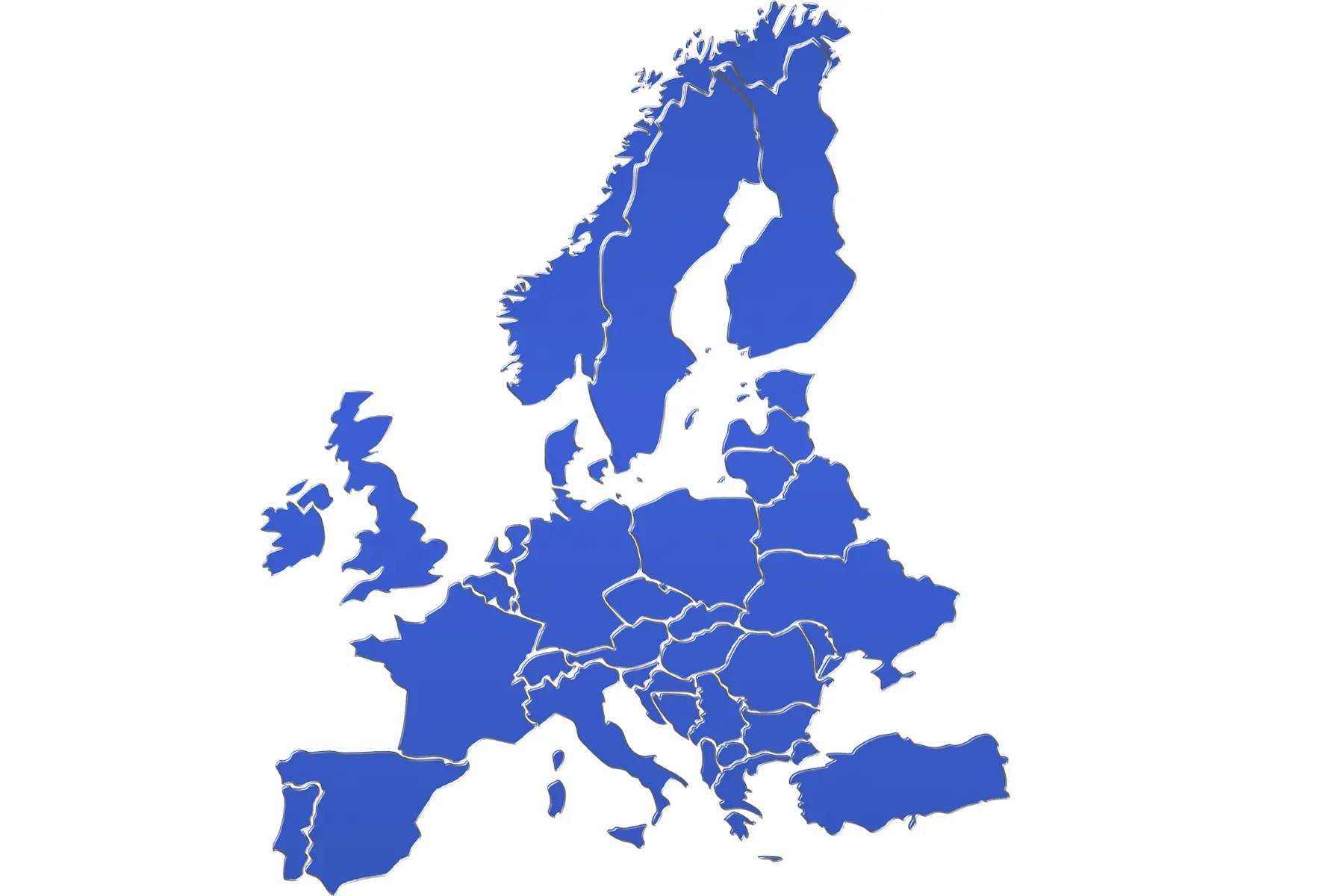
As of 2025, there are 44 officially recognized countries in Europe. These are the “core” European nations that are fully located within the continent. This number does not include transcontinental countries, which lie partly in Europe and partly in Asia. I’ll talk about these transcontinental countries later on in the article.
A Regional Breakdown of Europe
Europe is one of the most diverse continents on earth. From its languages and cuisines to its architecture and traditions, no two regions feel exactly the same. One of the easiest ways to make sense of Europe’s 44 countries is by looking at them region by region. Each region has its own unique character and flavor, which makes traveling across the continent feel like stepping into a completely new world every few hours.
Western Europe Countries
Western Europe is what many travelers think of first when they imagine “classic Europe”. This region is home to some of the most famous capitals, financial hubs, and cultural icons in the world. These are the countries that make up Western Europe:

Austria
Known for its alpine beauty, elegant cities like Vienna and Salzburg, and its deep musical traditions. Austria is where classical music, imperial history, and modern charm come together in a very seamless manner.
Belgium
Famous for waffles, chocolate, and beer, Belgium also boasts stunning medieval towns like Bruges and Ghent, alongside the bustling international capital Brussels.
France
A cultural giant that needs little introduction. France is the land of Paris, the French Riviera, world-class wine, and incredible art and history.
Germany
Europe’s economic powerhouse, known for its efficiency, beer gardens, castles, and diverse cities like Berlin, Munich, and Hamburg.
Liechtenstein
One of Europe’s tiniest nations, nestled between Switzerland and Austria. It may be small, but it’s big on alpine charm and hiking trails.
Luxembourg
A small but wealthy country, Luxembourg offers a beautiful mixture of old fortresses, modern finance, and a crossroads of European cultures.
Monaco
Glamorous and tiny, Monaco is a playground for the rich and famous, known for its casino, yachts, and Formula One race.
Netherlands
Famous for tulips, canals, windmills, and bikes, the Netherlands is both progressive and charming, with Amsterdam being one of Europe’s most visited cities.
Switzerland
A country that defines scenic beauty, with the Swiss Alps, crystal-clear lakes, and a reputation for precision, chocolate, and watches.
Northern Europe Countries

Northern Europe is where dramatic landscapes meet progressive societies. From the fjords of Norway to the colorful streets of Stockholm and the rugged beauty of Iceland, this region combines natural wonders with high living standards. It’s also famous for its Viking history, unique languages, and love for outdoor living. These are the countries that make up Northern Europe:
Denmark
Denmark offers visitors modern design, historic castles, and a strong cycling culture. Copenhagen, its capital, is famous for colorful Nyhavn harbor, Tivoli Gardens, and innovative cuisine like “New Nordic.”
Estonia
One of Europe’s most underrated gems, Estonia blends medieval charm with cutting-edge digital society. Tallinn’s Old Town feels like stepping back in time, while the country itself is one of the most digitally advanced in the world.
Finland
Known as the land of a thousand lakes, Finland is perfect for nature lovers. It’s also the birthplace of the sauna and offers incredible chances to see the Northern Lights in Lapland. Helsinki, the capital, mixes modern architecture with a relaxed lifestyle.
Iceland
Iceland is pure adventure. You visit this country and you are going to see a ton of beautiful glaciers, geysers, and stunning waterfalls. It’s one of the most unique landscapes on Earth, making it a dream destination for travelers who love the outdoors. Reykjavik is small but vibrant, with a thriving arts and music scene.
Ireland
Ireland charms with its rolling green hills, lively pubs, and warm people. Dublin is known for its literary history and Guinness, while the countryside offers ancient castles, cliffs, and scenic coastal drives.
Latvia
Latvia surprises many visitors with its wide sandy beaches and forests that cover nearly half the country. Riga, its capital, is famous for Art Nouveau architecture and a beautiful Old Town.
Lithuania
The southernmost of the Baltic states, Lithuania offers visitors a mix of medieval towns, baroque architecture, and of course a rich cultural history. Vilnius, the capital, is one of Europe’s most charming yet affordable destinations.
Norway
Norway is world-famous for its fjords, mountains, and dramatic natural beauty. Oslo, the capital, combines modern design with Viking heritage. The country is also one of the best places in Europe to see the Northern Lights.
Sweden
A land of islands, forests, and innovation, Sweden is as known for IKEA and ABBA (one of my favorite bands) as it is for its natural landscapes. Stockholm stretches across 14 islands, while the countryside offers endless opportunities for outdoor adventures.
United Kingdom
The UK is a cultural powerhouse made up of England, Scotland, Wales, and Northern Ireland. London is one of the most visited cities in the world, while Edinburgh, Cardiff, and Belfast each offer their own unique flavors of history and culture.
Southern Europe Countries

Southern Europe is often associated with sunshine, Mediterranean cuisine, and a slower pace of life. This region is full of ancient ruins, coastal beauty, and cultures that have influenced the entire world. From Roman history to Greek mythology, Southern Europe is where much of Western civilization was born. These are the countries that make up Southern Europe:
Albania
Albania is one of Europe’s rising travel destinations, known for its affordable prices, stunning beaches along the Albanian Riviera, and a mix of Ottoman and Mediterranean influences. Tirana, the capital, is colorful and lively.
Andorra
Nestled in the Pyrenees between Spain and France, Andorra is tiny but famous for duty-free shopping and ski resorts. If you are a traveler who loves both winter sports lovers and summer hiking, this country should be at the top of your travel list.
Bosnia and Herzegovina
This country blends East and West, with Ottoman bridges, Austro-Hungarian architecture, and beautiful mountains. Sarajevo and Mostar are cultural highlights, while the countryside offers rugged adventure.
Croatia
Croatia’s Adriatic coastline is world-famous, dotted with islands, medieval towns, and beaches. Dubrovnik and Split are highlights, while inland you’ll find stunning waterfalls at Plitvice Lakes.
Greece
The birthplace of democracy and philosophy, Greece is iconic for its ancient ruins, blue-and-white islands like Santorini, and incredible Mediterranean food. Athens is a historical wonder, while the islands offer unforgettable scenery.
Italy
Italy has it all. It has world-class art, ancient history, incredible cuisine, and stunning coastlines. Rome, Venice, Florence, and Milan are must-sees, but the countryside regions like Tuscany and Sicily offer some of Europe’s best experiences.
Malta
A small island nation in the Mediterranean, Malta is famous for its sunny climate and ancient temples older than the pyramids. Valletta, its capital, is a UNESCO World Heritage site packed with history, while the island of Gozo offers a more relaxed vibe.
Montenegro
Small but breathtaking, Montenegro offers dramatic mountains and a beautiful Adriatic coastline. Kotor Bay is a UNESCO gem, while Budva is perfect for beaches and nightlife.
North Macedonia
Known for its diverse culture and natural beauty, North Macedonia is home to Lake Ohrid, one of Europe’s oldest and deepest lakes, as well as rich Ottoman heritage in cities like Skopje.
Portugal
Portugal is famous for its historic cities, golden beaches, and delicious cuisine. Lisbon and Porto are cultural hubs, while the Algarve attracts visitors with its stunning coastlines and warm climate.
San Marino
One of the world’s oldest republics, San Marino sits high on a mountain with medieval towers overlooking Italy. It’s tiny but packed with charm and history.
Serbia
Rich in history and culture, Serbia is known for its lively capital Belgrade, historic monasteries, and vibrant nightlife. It’s an underrated destination that blends tradition with modern energy.
Slovenia
Although often grouped with Central Europe, Slovenia’s Adriatic coastline earns it a place in Southern Europe too. It’s a green and scenic country with Lake Bled, caves, and mountains that feel like a fairytale.
Spain
Spain bursts with energy, from flamenco and tapas to festivals like La Tomatina. Cities like Barcelona, Madrid, and Seville showcase Spain’s culture, while the beaches of Costa del Sol and the islands like Ibiza are world-famous.
Vatican City
The smallest country in the world, Vatican City is the spiritual center of Catholicism. St. Peter’s Basilica and the Sistine Chapel attract millions of visitors every year.
Eastern Europe Countries

Eastern Europe is a region full of history, resilience, and cultural richness. Once shaped by empires and the Soviet era, today it offers travelers a mixture of medieval towns, modern cities, and natural landscapes. From the Carpathian Mountains to the Black Sea coast, Eastern Europe is one of the most fascinating and affordable regions to explore. These are the official countries that come together to make up Eastern Europe:
Belarus
Known as Europe’s “last dictatorship”, Belarus is often overlooked by travelers, but it has its charms. Minsk, the capital, blends Soviet architecture with wide boulevards and green spaces. The country also offers forests, lakes, and a slower pace of life.
Bulgaria
Bulgaria is a land of contrasts, with Black Sea beaches, mountain ski resorts, and historic towns. Sofia, the capital, is one of Europe’s oldest cities, while Plovdiv is a gem of Roman ruins and cultural life.
Czech Republic (Czechia)
Best known for Prague, one of Europe’s most beautiful capitals, Czechia also offers medieval castles, spa towns, and great beer culture. Beyond Prague, towns like Český Krumlov feel like stepping into a fairytale.
Hungary
Hungary is famous for its thermal baths, paprika-rich cuisine, and the majestic capital Budapest, split by the Danube River. The country combines Central European culture with unique traditions of its own.
Moldova
One of Europe’s least-visited countries, Moldova offers peaceful countryside, world-class wineries, and a sense of authenticity untouched by mass tourism. Chișinău, the capital, is simple but welcoming.
Poland
Poland is a country of resilience, with historic cities like Kraków, Warsaw, and Gdańsk. It’s also home to powerful reminders of history like Auschwitz, alongside stunning natural sites such as the Tatra Mountains.
Romania
Romania feels like a land of legends, with medieval castles like Bran Castle (often linked to Dracula), scenic mountains, and charming villages. Bucharest mixes old and new, earning it the nickname “Little Paris”.
Slovakia
A small but beautiful country, Slovakia offers dramatic mountain landscapes, charming towns, and a capital, Bratislava, that sits right on the Danube River, near Vienna and Budapest.
Ukraine
Despite the challenges of recent years, Ukraine remains one of Europe’s largest and most culturally rich countries. Kyiv’s golden-domed churches, Lviv’s old-world charm, and the country’s resilience make it unforgettable.

Transcontinental Countries in Europe
Earlier, I mentioned that Europe has 44 core countries that are fully located on the continent. But if you look a little closer at the map, you’ll see there are a handful of transcontinental countries, which are nations that straddle both Europe and Asia. Whether you include them in the European count depends on the context, which is why different sources sometimes list more than 44.
Here are the key transcontinental countries:
Russia
Russia is by far the largest country in the world, stretching massively across two continents. About 23% of its territory lies west of the Ural Mountains, which is considered the European part. Cities like Moscow and Saint Petersburg are firmly in Europe, but the vast majority of Russia extends deep into Asia.
Turkey
Turkey famously bridges two worlds. Istanbul, its largest city, straddles the Bosporus Strait, meaning part of it sits in Europe and part in Asia. While most of Turkey’s landmass is in Asia, its European side plays a major cultural and historical role.
Georgia
Located at the crossroads of Eastern Europe and Western Asia, Georgia is often debated in terms of its continental identity. Its capital, Tbilisi, and its mountain landscapes make it culturally rich, with ties to both regions.
Armenia
Like Georgia, Armenia lies in the South Caucasus region. Politically and culturally, it has deep European connections, but geographically much of it sits in Asia.
Azerbaijan
Split by the Caspian Sea and the Caucasus Mountains, Azerbaijan is usually considered part of Asia, but its western side north of the Caucasus can be defined as Europe.
Kazakhstan
Most of Kazakhstan is in Central Asia, but a small portion of land west of the Ural River is technically in Europe. It’s one of those countries where geography and culture don’t always align neatly.
Why They’re Often Excluded
- These countries are not fully in Europe, which is why the strict count sticks to 44.
- Including them pushes the number closer to 50 or more, but not everyone agrees on where Europe truly “ends”.
- For travelers, the debate matters less than the experience. Cities like Istanbul or Moscow may be “borderline Europe”, but they are undeniably part of the continent’s cultural story.