
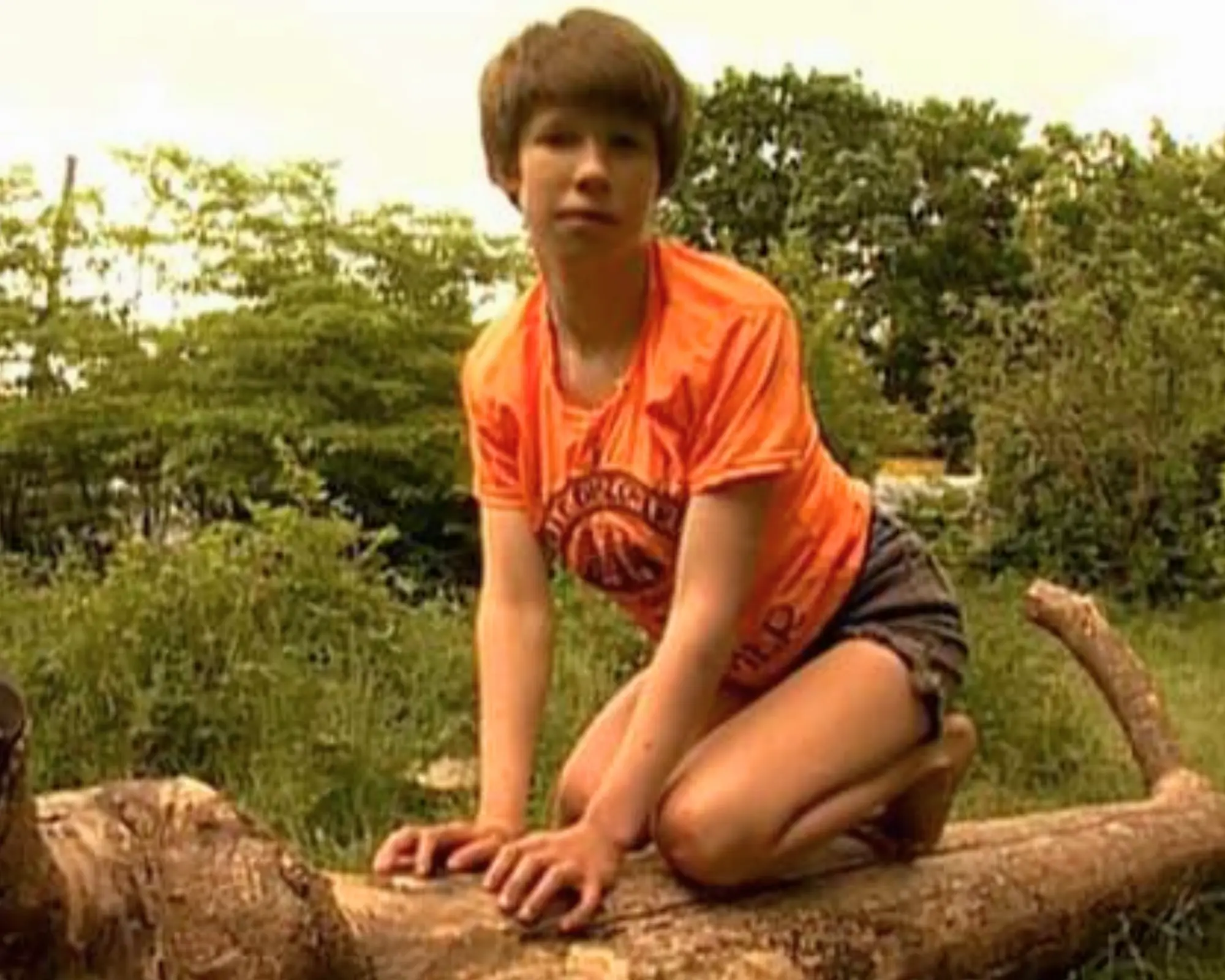
Oxana Malaya Today (2025 Update): The Shocking True Story of the Girl Raised by Dogs
Every now and then, you stumble across a story so unusual that it makes you stop, lean back and think: “This really happened?” One such story is that of Oxana Malaya, a girl from Ukraine who became known all over the world as “the feral child” after she spent most of her childhood being raised by dogs.
I first came across her case years ago, and even today, it’s one of those tales that’s both heartbreaking and fascinating. It’s like something you’d expect to read in a novel, not real life.
A Childhood Among Dogs
Oxana was born in 1983 in a small Ukrainian village called Nova Blahovishchenka. Life should have been normal for this child, but it was sadly far from that! Her parents were serious alcoholics, and by the age of three, she had been neglected to the point that she sought comfort elsewhere – in the company of dogs. In the dog kennel, this little girl found warmth as well as food scraps. There, she also found a strange kind of family.
By the time authorities found her at age eight, she was no longer acting like other children. Instead, she barked and walked on all fours just like the dogs she grew up with. And of course, she also preferred to be in the company of dogs than human beings. Just take a moment to imagine this. Your formative years shaped not by other kids at school, but by the rhythm of a dog pack.
According to reports, when Malaya was found by the authorities, they noticed she lacked many vital human basic skills and even ate like a dog. Of course, the authorities had to act instantly and took her away from her alcoholic parents into a foster home.
The World Takes Notice
When her story became public in the 1990s, the world was stunned. Journalists, psychologists, and TV crews all wanted to know more about the “dog girl of Ukraine”. Some saw her as a tragic symbol of child neglect, while others were fascinated by the raw adaptability of human beings.
Many documentaries were made about this little child and suddenly she was an international story. But behind all the media noise was just a young girl trying to make sense of a childhood that none of us could imagine living through.
The Long Road of Therapy
After being discovered, Oxana’s journey back into the human world was anything but simple. She underwent rehabilitative therapy and education for years. These steps were designed to help her unlearn the habits she had picked up from living with dogs. Imagine spending your earliest, most formative years barking, crawling, and eating like a pack animal and then being told to suddenly sit at a desk and act like the rest of society. That’s not an easy task to accomplish.
Therapists worked tirelessly with her to address her behavioral, social, and educational challenges. Slowly but surely, progress was made. She learned to walk upright again and communicate in full sentences. Eventually Malaya was able to speak fluently and intelligibly. But despite all this, the imprint of those early years never fully disappeared from her.

Where is Oxana Malaya Today?
As she grew older, Oxana was moved to a home for the mentally disabled. Last I read, she was working on a farm, living a relatively quiet life away from the spotlight. Of course she no longer barks or runs on all fours, but those who have met her say she still carries traces of the intellectual delays caused by her early neglect.
The last time Malaya appeared publicly in the media was back in 2013. She gave an interview on a popular Ukrainian show called Hovoryt Ukraina, where she spoke openly about her life. For someone who had been painted for years as “the dog-girl”, this was her chance to show the world that she was more than just a sensational headline.
On the show, Malaya made it clear that she wanted to be treated and respected like every other normal human out there. She admitted she felt hurt and offended whenever people referred to her as “dog-girl”, which reminded her of her painful past that she wanted to leave behind. She spoke candidly about her longing for family, saying her biggest dream was to reconnect with her biological mother and see her family more often.
Malaya also shared small but telling details of her everyday life, including her work with animals on the farm, her experiences living in a foster home, and even about having a boyfriend.
As of the writing of this post (September, 2025), Oxana Malaya is still alive. Now in her early 40s, she continues to live a quiet life away from the spotlight in Ukraine.
Feral Children in History
It should be noted that Oxana Malaya’s case isn’t the world’s only such case. Over the years, there have been more cases of “feral children” that fascinated and horrified the world. One of the most famous cases was Genie. Genie was a girl in the United States who, in the 1970s, was found after being locked away and isolated for most of her childhood. Like Oxana, she struggled to develop normal speech and social skills even after being rescued.
In India, stories surfaced in the 1920s of two girls, Amala and Kamala, who were reportedly raised by wolves. That being said, it is worth noting that the Indian case is debated by historians.
In France, the 18th-century “Wild Boy of Aveyron” became a subject of study for scientists after he was found living in the forest, unable to speak or behave like other children.
Psychologists are naturally drawn to these cases because they shed light on something fundamental: how much of being “human” comes from nurture, not just nature. A child’s brain is incredibly adaptable, but it also has critical windows of development. If the likes of language, affection and human interaction aren’t present in those early years, catching up later becomes a lifelong challenge.
Reflections on Nature and Nurture
The fact that random animals can just take in a human child and keep it alive while at the same time teaching the human child how to live as they do is utterly fascinating. The truth is such stories blur the line between instinct and intelligence while also raising some fascinating questions.
For example, did Malaya, and others like her, use their human intelligence to imitate the animals around them? Or did the animals themselves have the awareness to guide and teach the child, just as they would a pup from their own litter?


