When I think of Qrendi, I don’t picture cafés or cute lanes first. I picture nothing but stone – very massive, honey-colored blocks arranged with intention on a windy plateau above the Mediterranean. The highlight of my trip to Qrendi, Malta wasn’t a viewpoint or a beach. It was the privilege of being able to stand between Ħaġar Qim and Mnajdra, two prehistoric temple complexes that quietly reset how I see Malta.
I’ve visited a lot of “old things” around the world. But these felt incredibly different. They somehow had the ability to not only force you to look in awe but also listen.
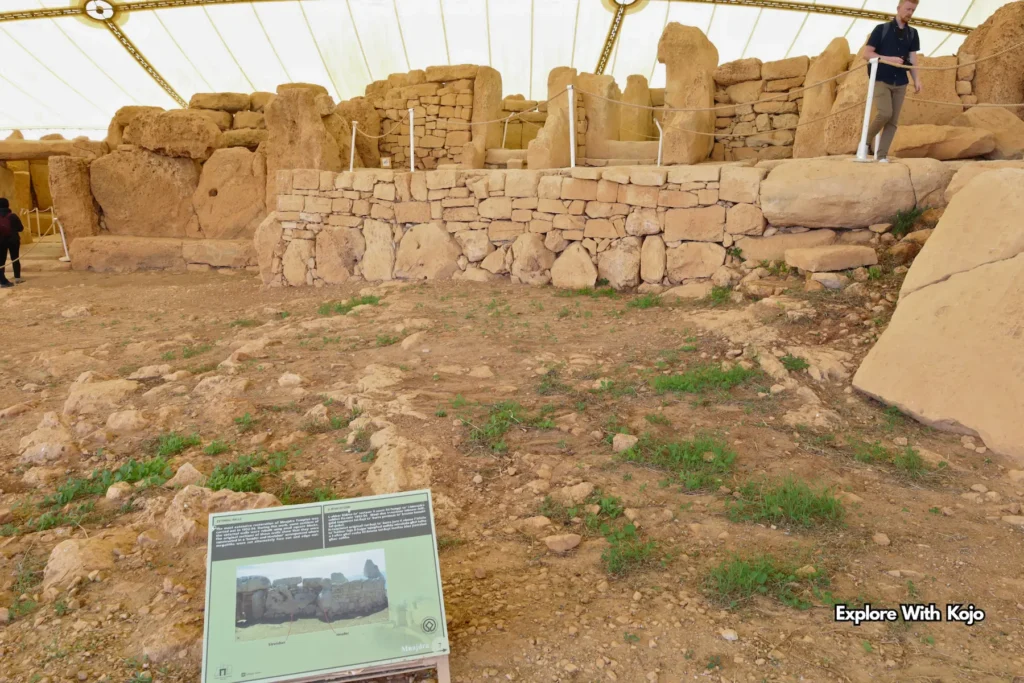
A wider view of Mnajdra’s restored sections.
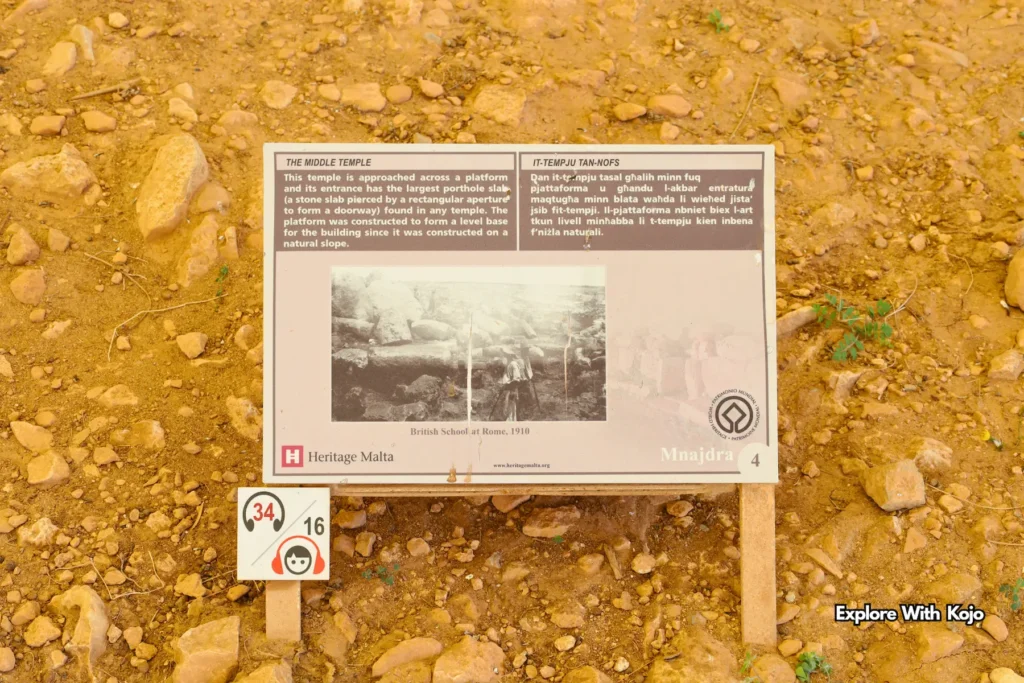
Mnajdra information board showing the Middle Temple and a photo from 1910.

The walls of Mnajdra show remarkable craftsmanship.

Inside Mnajdra, sheltered under its canopy from Malta’s harsh sun.

Me at Ħaġar Qim during my visit to Qrendi.
Why These Temples Hit Different
Ħaġar Qim is the first of the two to greet you. It is broad and slightly wild. Maybe I can describe it like something someone dragged up a slice of cliff and stood it upright. The stones are seriously enormous. You can almost see the fingerprints in the limestone.
Walk a few minutes downhill and you get Mnajdra, which is much leaner and more precise. Stand at the doorway and watch how the light slices across the threshold. You don’t need a signboard to understand that someone engineered this place for the sun. On equinox mornings, the sunrise lines up with the doorway like a key turning in a lock. Thousands of years later, it still works.
What moved me most was their age. Believe it or not but these are older than the pyramids!
Inside Mnajdra, sheltered under its canopy from Malta’s harsh sun.

Inside Ħaġar Qim, protected under its large canopy.

Display panel at Ħaġar Qim showing how builders may have rolled heavy stones into place.

The wide view of Hagar Qim shows the incredible layout of the site, now protected under a modern canopy to safeguard its prehistoric stones.
What It Felt Like To Be There
I arrived just after opening, with the sea wind still cool and the plateau almost empty. Ħaġar Qim sits under a modern canopy (thank you, Maltese sun), so the shadows are soft. A small group wandered through; then it was quiet again. You notice very important things in the silence such as the way a stone curves where a hand might have rested and the polished edge of a passage. You also notice the tiny fossils in the limestone like constellations frozen under your fingers.
The walk down to Mnajdra is simple – just enough distance to separate the two sites in your mind. Mnajdra felt like the punchline after a good story. The sea is right there. If you crouch and look through the doorway at eye level, the horizon sits like a ruler against the sky. It’s hard not to smile.
I recommend you go early morning or late afternoon. The light is softer, the heat is kinder and the photos look richer.

The interior passage of Hagar Qim feels like stepping into another era, with colossal limestone slabs towering on both sides.

A Heritage Malta sign highlights unique features like the two-meter central pillar and the “oracle hole,” symbols of the temple’s sacred design.

The temple grounds blend naturally with Malta’s countryside, where scattered stones tell a story of a civilization long gone.
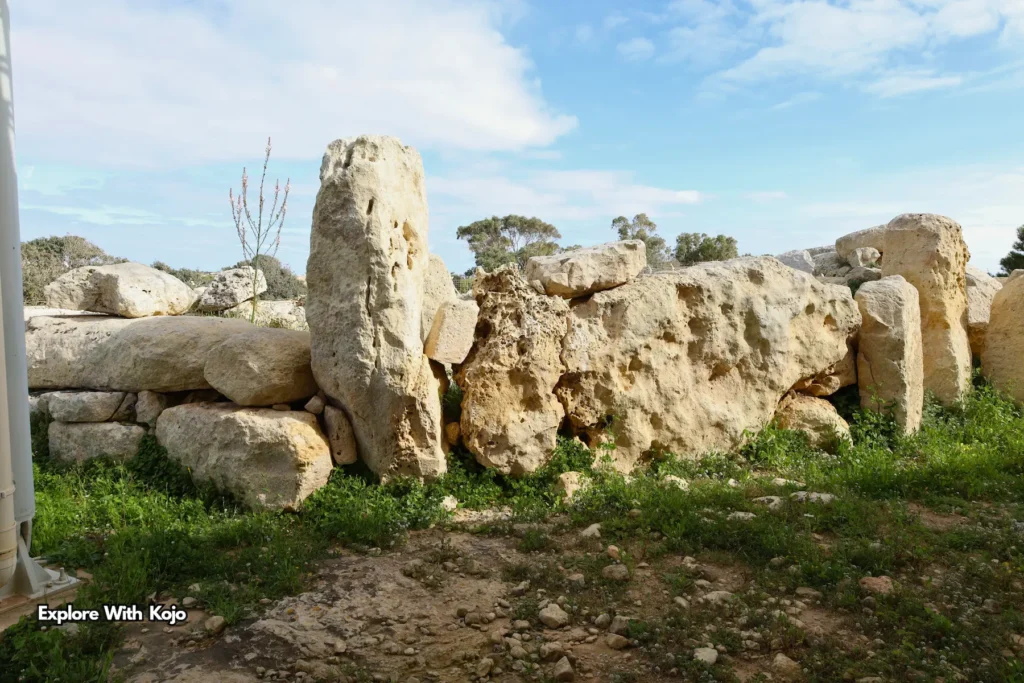
The thick limestone walls of Hagar Qim stand solid against time, a reminder of how Malta’s earliest builders shaped massive stones into lasting monuments.
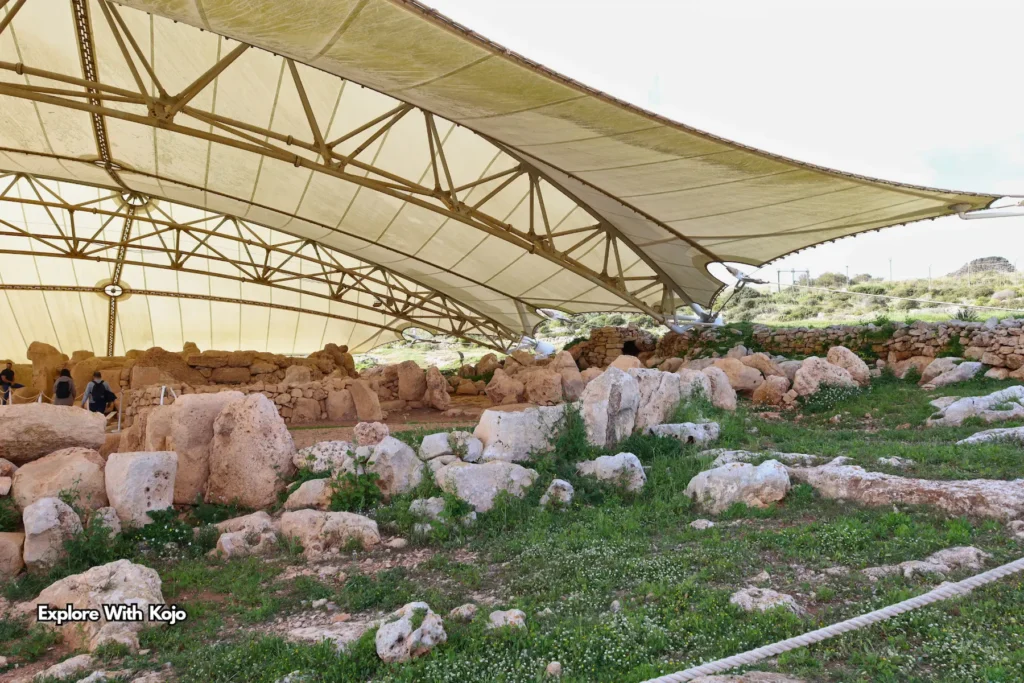
The protective canopy seen from the outer path.
Ħaġar Qim and Mnajdra facts
I’ve been to a lot of historic sites, but Ħaġar Qim and Mnajdra in Qrendi stayed with me in a different way. Below are the simple things I noticed and learned:
- These temples are truly ancient. We are talking many centuries before the pyramids or Stonehenge.
- UNESCO lists them because they happen to be some of the oldest freestanding stone buildings you can find anywhere on this planet.
- Mnajdra works like a quiet sun clock. On the equinox the sunrise lines up with the doorway and you can actually feel the timing in your body.
- Inside Ħaġar Qim there is a small opening that lets a beam of light in around the summer solstice. What this does is that it subsequently paints a glowing spot on the stone like a natural spotlight.
- The builders used local limestone for the construction. The harder stone takes the weather while the softer stone shapes beautifully.
- Some blocks are very enormous. I have seen the round stone rollers in the site displays and I can picture people inching those giants across the ground. It is very incredible.
Some More Fascinating Facts
- Finds from the sites include animal bones and altars. It looks like people gathered here for rituals tied to seasons and life.
- For centuries the temples were covered by soil. That is the primary reason they survived as well as they did until archaeologists uncovered them.
- Ħaġar Qim has a modern canopy. This canopy is not only for visitors. Actually it protects the limestone from sun and salt.
- The two sites feel like partners. Ħaġar Qim sits higher and looks bold. Mnajdra sits closer to the cliffs and feels precise. The walk between them ties the story together.
- If you lower your eye level in Mnajdra’s main doorway the horizon lines up perfectly. The average visitor wouldn’t need a guide to sense the alignment.
- The visitor center is worth a few minutes. After the short film and models the details in the stones make a lot more sense.
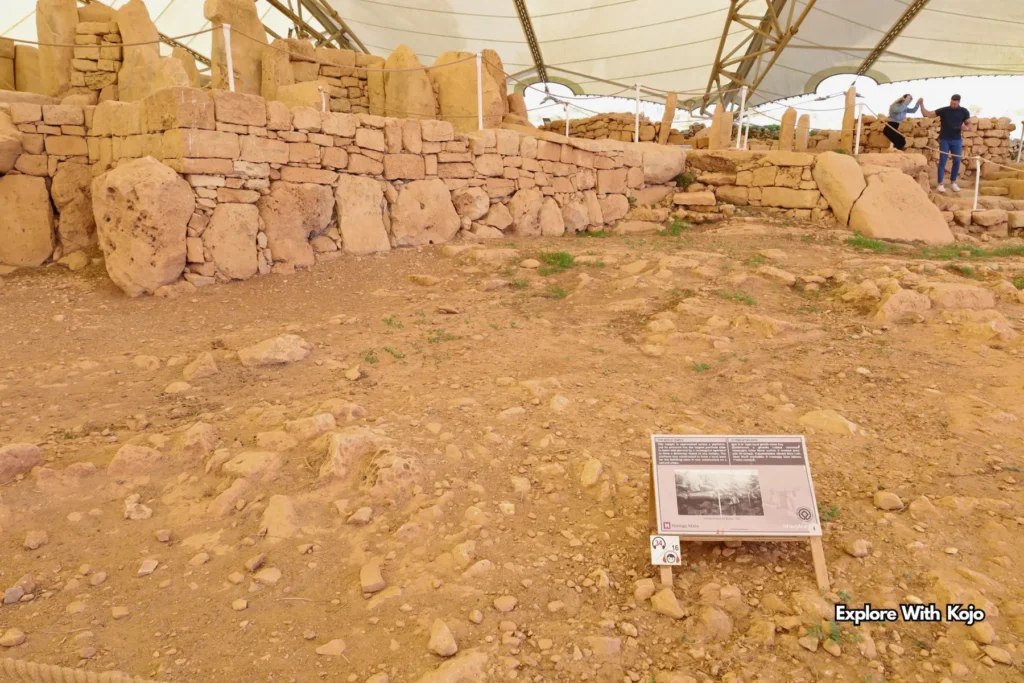
Information board detailing the excavation history of Ħaġar Qim.
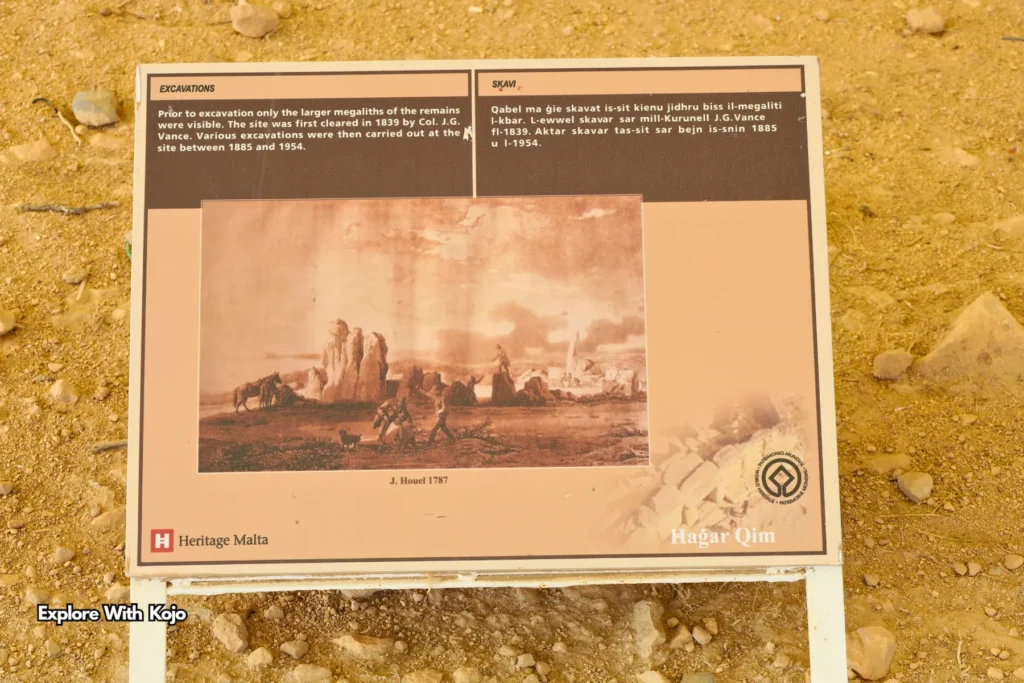
A Heritage Malta board tells the story of Hagar Qim’s excavation, first cleared in 1839 and later explored between 1885 and 1954, revealing the temple’s hidden grandeur.
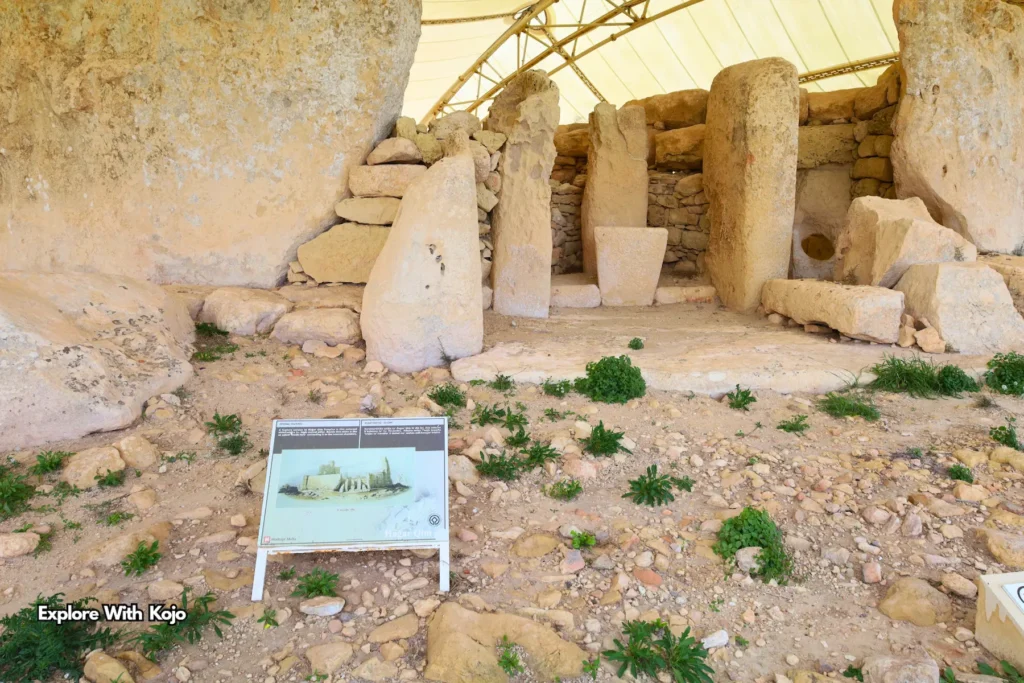
The entrance to Hagar Qim gives visitors an immediate sense of scale, with enormous limestone slabs forming the temple’s outer boundary.
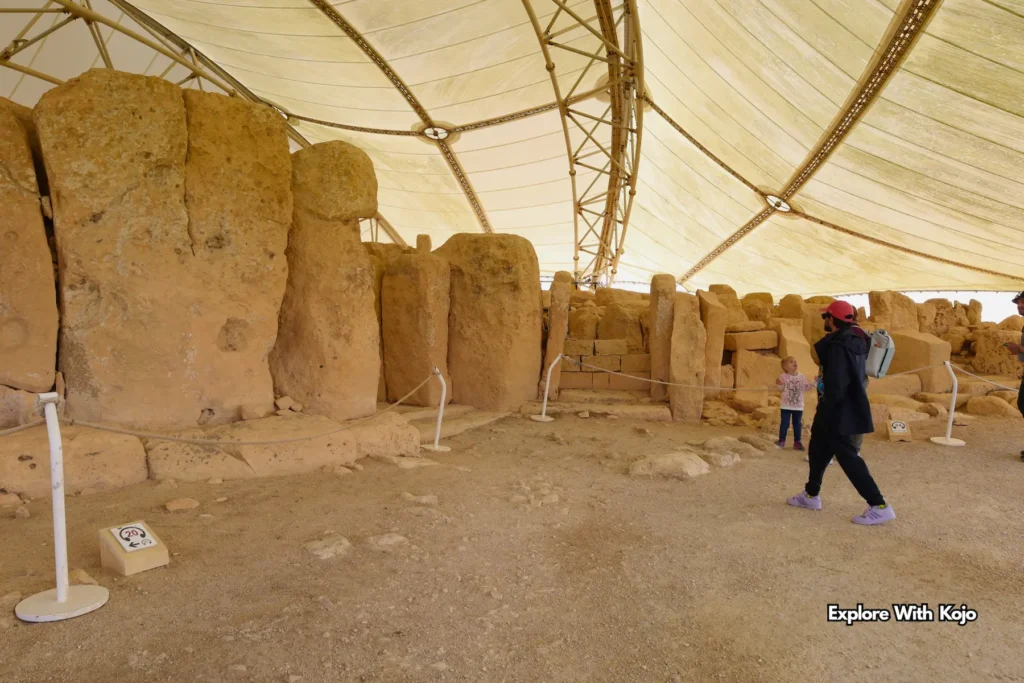
Visitors exploring the Hagar Qim Temple can see how the structure still commands awe, even after more than 5,000 years of existence.

Visitors exploring the main temple of Ħaġar Qim under its modern shelter.
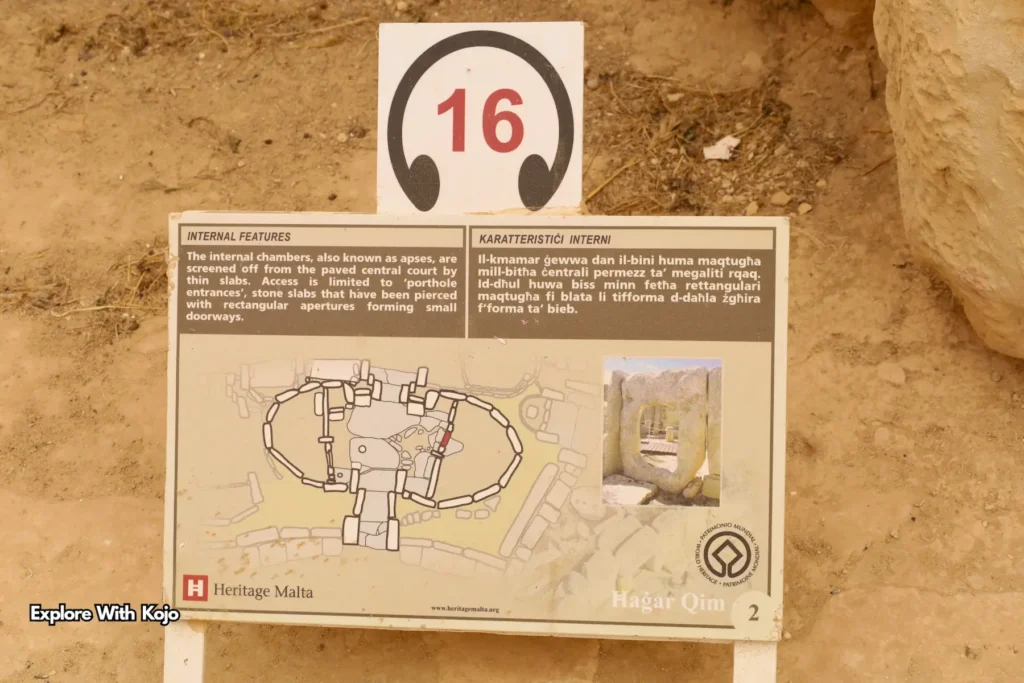
Heritage Malta’s sign shows sketches of ancient altars and spirals, evidence of a deeply symbolic culture that once thrived here.
Combine the visit with Blue Grotto nearby

The Blue Grotto is Malta’s famous sea arch and one of the most beautiful coastal views near Ħaġar Qim and Mnajdra. On sunny days, the water shines with deep shades of blue.
The Blue Grotto is a cluster of sea caves located on Malta’s south coast (near Żurrieq). This grotto is famous for the fascinating way sunlight bounces off white sand and limestone to light the water a bright electric blue. Most people see this fantastic sight by taking a short boat ride from the tiny harbor at Wied iż-Żurrieq. From here, the boat will glide under the big natural arch and into a few smaller caverns.
If you are already at Ħaġar Qim and Mnajdra, Blue Grotto is right around the corner. It is the perfect add on for the same half day.
How to plan it
- Start early at Ħaġar Qim, walk down to Mnajdra, then head to Blue Grotto late morning.
- Or flip it. Do a short Blue Grotto boat trip first thing when the sea is calm, then the temples when the light softens.
What to do at Blue Grotto
- Take the 15 to 20 minute boat ride into the sea caves if conditions allow. The water glows a strong blue when the sun is higher and the sea is clear.
- If boats are not running, walk to the viewpoint above for wide photos of the arch and coastline.
Logistics that help
- It is roughly 4 to 5 minutes drive from the temples. Walking is possible but the road is narrow, so I prefer a quick ride.
- Check the sea condition at the ticket kiosk. If the wind is up, boats stop for safety reasons.
- I recommend you bring cash and a hat. Phones and lenses fog with salt if you are not careful.
Photo tips

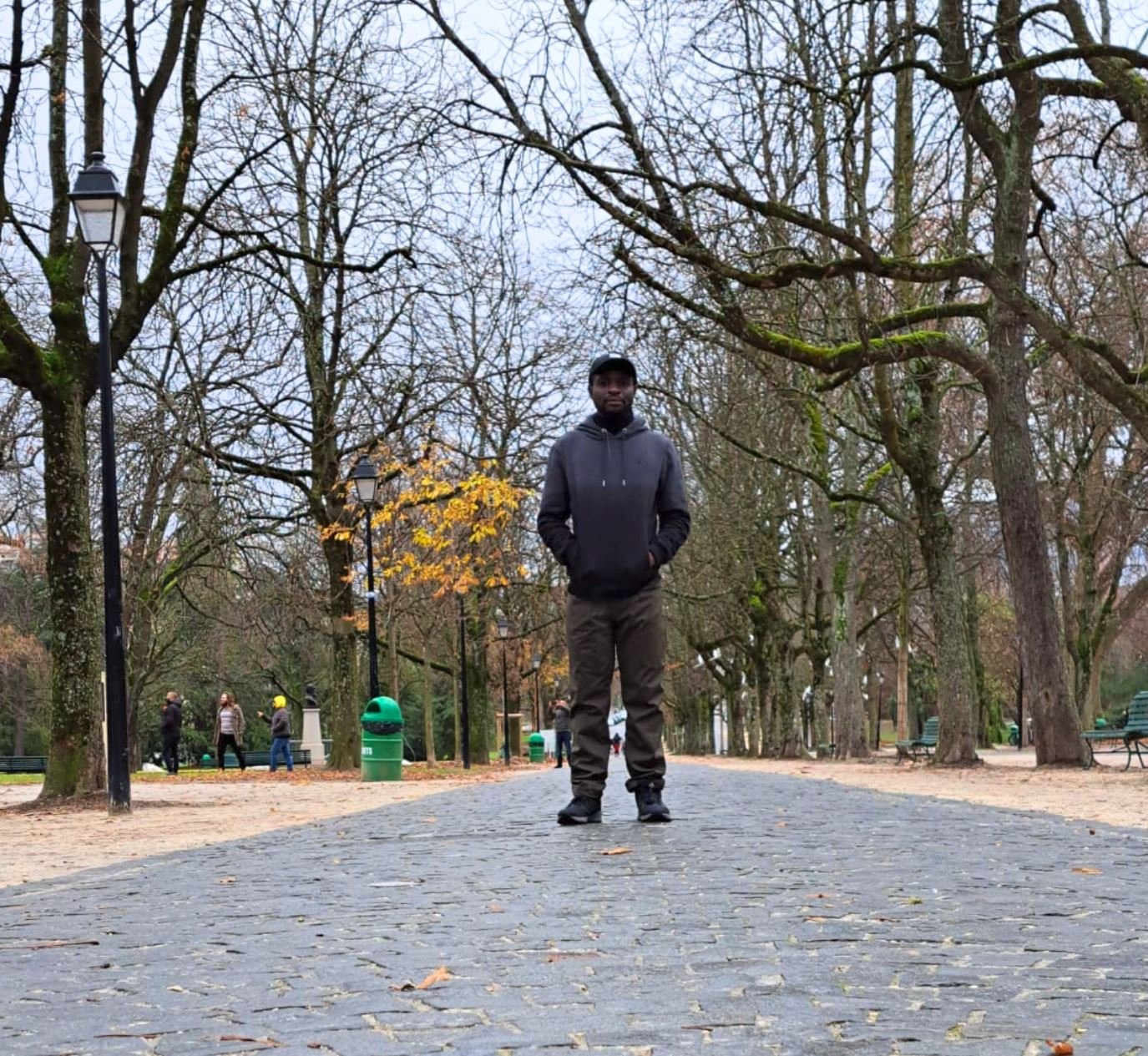
Me standing near the Qrendi cliffs, just a short walk from the temples.
- For the caves, I’d recommend a fast shutter. I also recommend sitting near the front of the boat if you can.
- For the viewpoint, late afternoon gives warmer rock tones. Early morning gives softer skies.
Respect and rules
- No swimming from the boat. Always listen to the skipper.
- Drones are restricted. Make sure to check the current rules before you fly your drone.
Do both in one go and you get Malta’s south coast in two moods. Stone and sky at the temples. Sea and light in the caves.
Photo Journal from Ħaġar Qim and Mnajdra
Before we wrap up, here are more photos from my time on the plateau. I shot these across different hours to show how the light moves on the stones. You will see Ħaġar Qim up on the rise, Mnajdra closer to the sea, and the simple path that ties them together. Look for doorways, curves, tool marks, and the soft fossils in the limestone.

Standing in this chamber, it is easy to imagine how the space once felt enclosed when the corbelled roof stood intact above these ancient

Inside the Hagar Qim Temple, the inner walls display the weathered texture of limestone that has survived thousands of years of wind and time.

A doorway leading into a chamber.
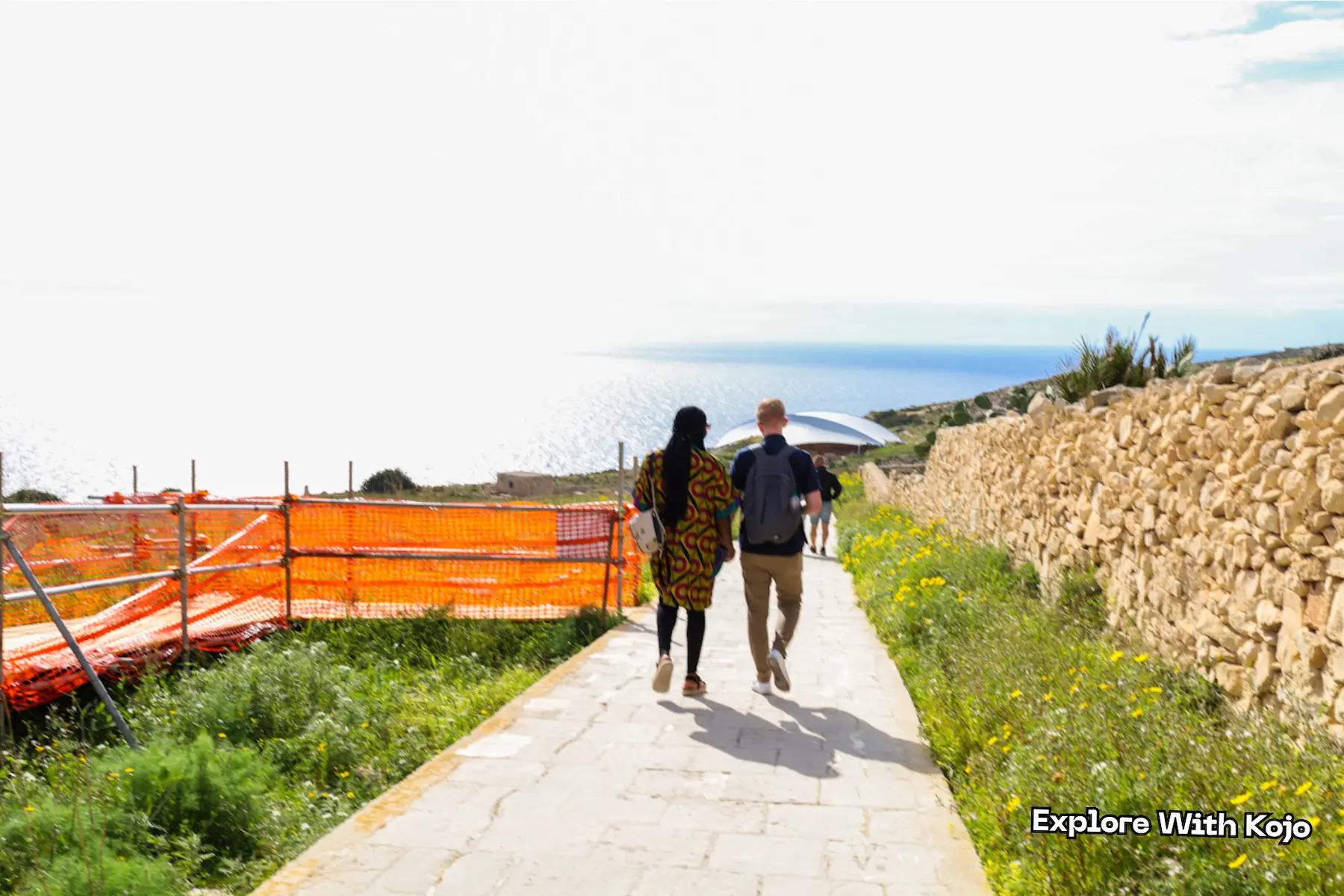
Walking down the sunlit stone path toward Mnajdra, with the Mediterranean sparkling ahead.
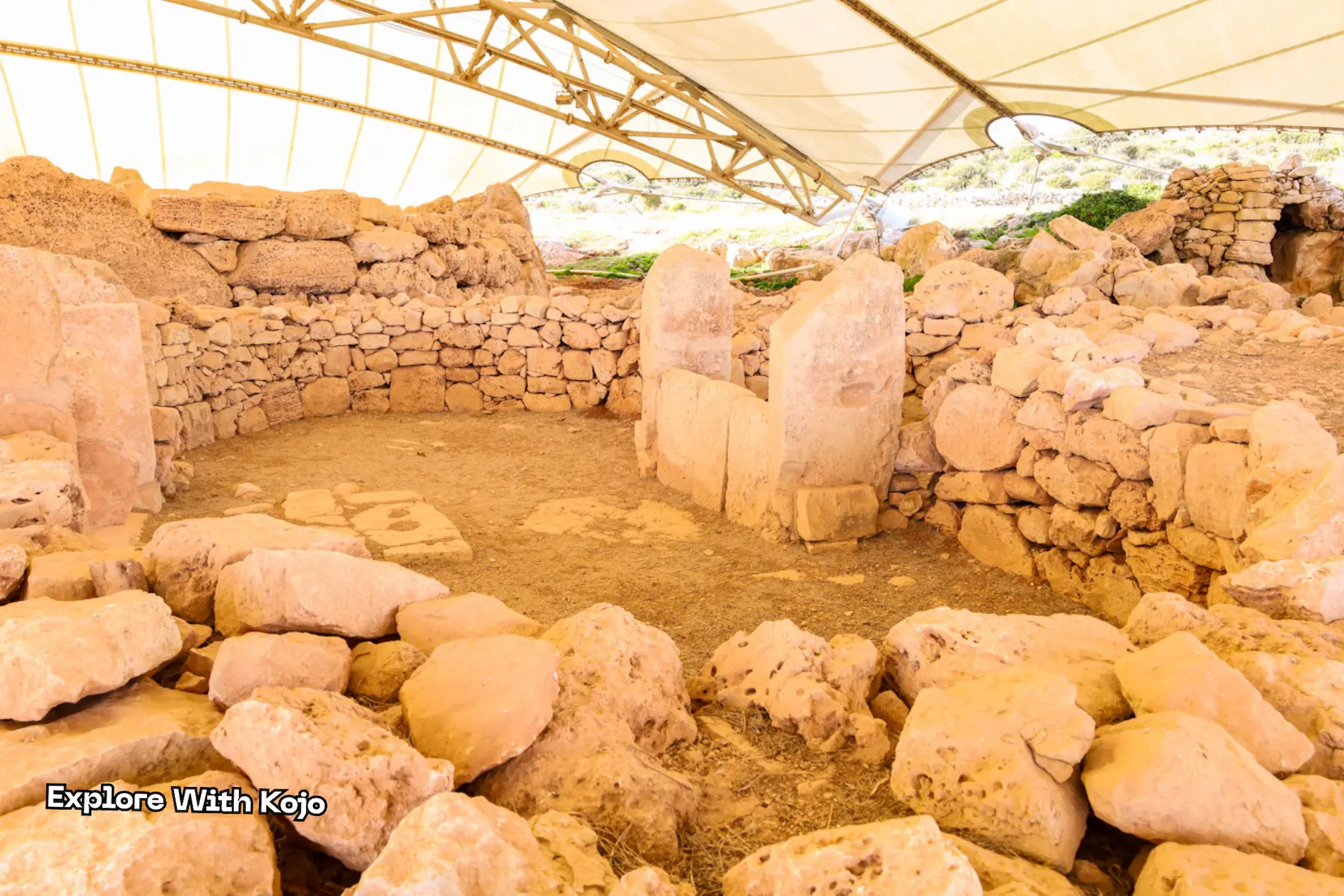
One of Mnajdra’s upper chambers, still standing strong after thousands of years.

How did they move these colossal stones? A mystery that still amazes visitors.

The entranceway of Mnajdra hints at early architectural precision.
How to Get There
- From Valletta/Mosta/Sliema: Bus to the visitor center (search “Ħaġar Qim” in your maps app) or drive and park on site.
- Tickets: Sold at the visitor centre and usually cover both sites plus the exhibition. Prices and opening hours change. I recommend that you check Heritage Malta for the latest.
- Accessibility: Paths are well marked. Mnajdra is downhill (and uphill back). Give yourself time and water.
- What to bring: Hat, water, camera, and comfortable shoes you don’t mind collecting limestone dust on.