10 Places on Earth You Are Forbidden From Visiting
We live in a world where it honestly sometimes makes you feel like you can travel almost anywhere if you have the right passport and the right amount of money. If you possess the aforementioned coupled with a little bit of patience, it would appear that no part of the world is out of reach to you. But that’s not entirely true. There are still places on this planet where no matter how much money you have or how strong your passport is, you simply cannot show up as a tourist.
You see some of these places are highly protected because of the people who live there. Some, on the other hand, are military sites or are incredibly fragile environments. Also, some are places containing things that governments and scientists simply don’t want the public getting close to.
The interesting part is that some of these places are not even hidden. You can actually find them while browsing through Google Maps or see photographs of them online. In some cases, you can even travel incredibly close to them, depending on how bold or lucky you are. But actually setting foot inside some of these places is a completely different story. So in this article, let’s take you around the world and show you 10 places that ordinary people are forbidden or one can say severely restricted from visiting. Not only are we going to do that, but we will also explain to you why that’s the case.
Some of the reasons might make perfect sense to you whereas others might be so strange you’ll find it hard to believe.
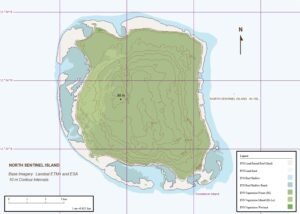
North Sentinel Island, India
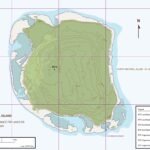
North Sentinel Island is without a shred of doubt one of the best examples of a place where you can find quite easily on a map but cannot simply decide to visit it if you wanted to. This very tiny island sits right in the Bay of Bengal and it is actually part of India. The island is a part of India’s Andaman and Nicobar Islands.
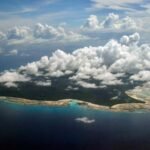
When you view this island from the air, it looks like the sort of tropical island many of us would be beyond happy to spend a holiday on. You see the thick green forest and the white beaches. And the clear blue waters are also luring. But what you should know about North Sentinel is that it is home to the Sentinelese and the Sentinelese people are one of the world’s most isolated Indigenous peoples.
These guys have made it abundantly clear that they do not want to have anything to do with outsiders. They are 100% against outsiders coming to their island to the point where the Indian government has been forced to declare the entire island alongside the sea extending 5 kilometers from its coastline, a tribal reserve area.
What this basically means is that entry by outsiders is strictly prohibited. In addition to that, the Indian authorities also constantly monitor the area by sea as well as by air. There is a very good reason for this is not just because the Indian government has chosen to respect the wishes of the Sentinelese but also because these people have lived with extremely limited contact with the outside world to the point that if they come in contact with outsiders, they could be exposed to diseases against which they may have little immunity.
Outside of that, there have also been deadly encounters with people who ignored the restrictions. The most widely known occurred in 2018. This was when an American missionary named John Allen Chau travelled illegally to the island in an attempt to contact and convert the Sentinelese. He instantly got killed by the Sentinelese upon stepping foot on their island.
Once again, North Sentinel is not just some mysterious tourist attraction that the authorities in India don’t want people seeing. The authorities have placed these restrictions for the sole purpose of protecting the isolated community living there so its people can continue living on their own terms. So you can look at North Sentinel on a map from the comfort of your home. You can also read about it and see satellite images of it. But for the ordinary traveler like you and I, that is about as close as we should expect to get.
Surtsey Island, Iceland
When it comes to Surtsey Island, it is forbidden for a totally different reason. Unlike North Sentinel, there isn’t an isolated community living on this island. So what is actually going on here? Believe it or not, until the 1960s, the island didn’t even exist. This is what happened. Towards the end of 1963, there was a major volcanic eruption beneath the Atlantic Ocean south of Iceland that eventually broke through the surface. Lava and volcanic material build up so much that a completely new island was formed. The eruption lasted, with some interruptions, until June 1967.
Scientists immediately realized they had been handed an extraordinary opportunity to observe and learn. Let’s just imagine this rare situation where you are able to watch an island effectively begin from scratch and observe how long it would take before the first plants appeared. How would insects arrive on the island? A the birds, when would they begin nesting there? How would an ecosystem develop if humans simply left the place alone? Put simply, this is essentially the experiment that is currently taking place on Surtsey.
Iceland made a decision to protect the island as early as 1965. This was around the time the volcanic eruption was still happening. Owing to this, tourist visits were prohibited from going visiting that island. The goal is to prevent humans from introducing plants, seeds, animals or other organisms that could interfere with the natural development of the island.
Today, the protected reserve not only covers Surtsey itself but also the surrounding ocean. In total, we have an area of about 65 square kilometers that is restricted. Going ashore requires permission, which have to be tied to scientific research and closely related work. That has allowed scientists to watch nature gradually colonize the island with remarkably little human interference.
Every day, geologists study how the young island is being shaped and eroded, while biologists monitor the arrival and development of plants and animals. Surtsey is often described as the world’s most studied volcanic island. So while Iceland welcomes millions of visitors to its volcanoes, glaciers and waterfalls, this particular piece of Iceland is different. We can confidently say that Surtsey is essentially a giant natural laboratory – one that humans are considered the contamination that scientists are trying their best to keep out.
Snake Island, Brazil
There is an island off the coast of Brazil that has developed such a frightening reputation that its unofficial name tells you almost everything you need to know about it. And the name in question is none other than Snake Island. That said, its real name is Ilha da Queimada Grande, and you can find this strange island off the coast of the Brazilian state of São Paulo.
The interesting thing about this island is that unlike many supposedly “forbidden” places you read about online and in books, this one really is not open to the general public. The reason is largely connected to one remarkable animal. The island is the natural home of the golden lancehead (Bothrops insularis), which is a very venomous snake that you can’t find anywhere else in the world.
It is believed that thousands of years of isolation separated the snakes from their mainland relatives, which eventually resulted in the distinct species that lives on Queimada Grande today. That said, there is also a lot of nonsense and fake stories written about this island. You may have seen claims that there is a snake on every square meter of land and that the snakes can melt human flesh with their venom. Some even claim that anyone who is bold enough to set foot on the island would instantly die.
But most of these claims are false. According to Brazil’s Instituto Butantan (whose researchers actually study the snakes), many of these stories are exaggerated or simply myths. But that obviously doesn’t mean you should start planning a holiday there. The thing about the golden lancehead is that it is genuinely venomous, and restricting human access also helps protect an endangered species with an extremely limited natural habitat. Researchers are among the relatively few people who are able to visit the island.
It is also worth taking note of the fact that Queimada Grande isn’t some enormous wilderness hidden deep inside the Amazon. The Snake Island is a relatively small island visible on maps off the coast of one of Brazil’s most populated regions. Despite that, for most of us, this fascinating island is a place we will only ever see in photographs. And the truth is that considering what lives there, perhaps that’s not such a bad thing.
Lascaux Cave, France
Our fourth place is different because it is a place that millions of people around the world would probably love to visit it. But the problem is that we nearly destroyed it the first time around. Lascaux Cave, which is located in southwestern France, is a place that contains an extraordinary collection of prehistoric paintings.
This remarkable cave was discovered somewhere in 1940 by a number of teenagers. The walls of the cave are full of depictions of animals, signs and other images believed to have been created several thousands of years ago. It is actually estimated that we are talking about somewhere along the lines of 20,000 years ago.
And of course as soon as it was discovered, it quickly became a tourist attraction. It was first opened to visitors in 1948, which brought enormous numbers of people passing through the cave. At its peak, Lascaux was reportedly receiving almost 2,000 visitors a day. And that’s when the problems started as visitors began changing the cave’s delicate environment.
Visitors were said to have brought increased carbon dioxide as well as too much humidity that encouraged algae and deposits to develop on the walls. Essentially, the very people coming to admire the paintings were unintentionally helping to destroy them. Owing to this, France was eventually forced to make a drastic decision. So accordingly, in 1963, the original Lascaux Cave was closed to the public.
More than six decades later, the place still remains closed to visitors. Only a very small number of authorized researchers and conservation specialists are permitted inside. That said, there is an interesting solution to this. If you travel to Lascaux today, you can still experience the cave. Of course not the real one. What French government did was create extraordinarily detailed replicas for visitors to enjoy. The most extensive of them, Lascaux IV, reproduces the original cave using information gathered through 3D surveys and other techniques.
As a result of this, visitors can experience what Lascaux looks like without putting the original paintings at further risk. I find this one particularly interesting because there isn’t anything inherently dangerous about you entering Lascaux. In this case, you the visitor are actually the danger. Things ranging from your breathing to your body heat to your presence can alter an environment that survived for thousands of years before modern humans rediscovered it. So this shows that it is not all the time that a place is forbidden because it might harm us but rather because we might harm it.
North Brother Island, New York City, USA
You might expect a forbidden island to be hidden somewhere in the middle of an ocean. But the thing with North Brother Island is that it is absolutely nothing like that. It sits right in New York City! You will find it in New York City’s East River, between the Bronx and Rikers Island, surrounded by one of the most populated urban areas in the United States.
And the interesting thing about it is that thousands of people literally live just a short distance away from it, yet the general public is not allowed to visit. North Brother Island was once home to Riverside Hospital, which opened there in the late 19th century as a place to isolate people suffering from contagious diseases. Patients with illnesses such as smallpox and tuberculosis were kept away from the rest of New York’s population.
One of the island’s most famous residents was Mary Mallon, who was better known as “Typhoid Mary”. Mallon carried the bacteria that causes typhoid fever without showing the usual symptoms herself. After investigations found her to connected to outbreaks of the disease, she was eventually quarantined on North Brother Island. On this island she spent many years and ultimately died in 1938.
But serious diseases aren’t the island’s only connection to tragedy. Another very sad incident happened in 1904 where the steamship named General Slocum caught fire and sank near North Brother Island. The sinking of the ship ended up claiming the lives of more than 1,000 people. This tragedy is considered one of New York City’s worst disasters of all time.
People on the island managed to help rescue survivors who successfully got to the shore. Not long after that, the hospital eventually closed and the island went through several other uses and phases before being abandoned eventually. After this, nature then began taking total control of it. Today when you look at pictures of it you will see mostly trees and vegetation surrounding the remains of old hospital buildings and other structures. From photographs, it honestly almost looks like a miniature abandoned city slowly disappearing into the forest. But don’t assume that means you can hire a boat and explore it. New York City currently manages North Brother Island as what they call a nature preserve and bird sanctuary.
In a 2026 response to a proposal to restore the island and allow visitors, the city’s authorities gave a big NO to the request. According to them, the island is unable to accommodate requests to visit the island or allow public access, citing both wildlife habitat and public safety. That’s what makes North Brother Island super strange and interesting. You don’t have to travel to some distant corner of the planet to find this island. You could be standing in one of the world’s biggest cities, surrounded by millions of people, and still be looking across the water at an abandoned island you’re not allowed to explore.
Heard Island and McDonald Islands, Australia
If North Brother Island is surprisingly close to civilization, our next destination on this list is almost the complete opposite. Heard Island and the McDonald Islands are among the most isolated places you can find on Earth. These two places are Australian territory, but don’t imagine anything resembling the likes of Sydney, Melbourne or the beaches of Queensland.
These islands lie in the southern Indian Ocean, around 4,000 kilometers southwest of mainland Australia. They are also somewhere around 1,700 kilometers north of Antarctica. Nobody permanently lives in these islands and there are no towns, hotels, airports or restaurants waiting for visitors. The Australian authorities have described the islands as unoccupied and largely undisturbed by human activity.
Of the two islands, Heard Island is particularly more spectacular in the sense that it contains Big Ben, which is a huge volcanic massif dominated by Mawson Peak (which is an active volcano rising from an island covered substantially by glaciers). So why can’t you simply organize an expedition and go there? Technically, Heard Island isn’t what one call completely forbidden. But this is where the distinction between “forbidden” and “strictly restricted” becomes important for readers to take note of.
Australian law requires anyone entering the territory to have a permit, except in specific circumstances such as an emergency. And proposed activities on the island have to go through environmental assessment. At the time of writing this article, applications currently need to be submitted at least five months before the intended departure. A lot of readers might find this weird but the reason for all this bureaucracy becomes obvious when you understand what Australia is protecting.
You see Australia describes the region as one of the most biologically pristine in the world, and the territory has World Heritage protection as well as marine-reserve status. Even bringing something seemingly insignificant onto the islands can be significant to matter a lot. Australian regulations control things from the introduction of organisms to the collection of natural material to the movement of vehicles and vessels. They want no one interfering with wildlife there or even disturbing the soil or geological material of the islands.
And getting permission is only part of the problem because you still have to actually get there. The islands are thousands of kilometers from Australia’s mainland and the weather can be severe. On top of that there is no permanent human settlement to rely upon once you get there. Owing to this, visitors are expected to be self-sufficient.
So I think that this region in Australia presents a different kind of forbidden destination. And why? There isn’t a military guard standing at a gate telling you to turn around. Instead of that you are going to find the likes of thousands of kilometers of ocean and some of the harshest conditions on Earth coupled with strict environmental laws protecting one of the planet’s least disturbed ecosystems. For most of us, that’s more than enough to keep this particular Australian territory permanently on the map rather than on our travel itinerary.
The Inner Sanctuaries of Ise Jingu, Japan
Our seventh place on this list is a little different because you absolutely can visit Ise Jingu. In fact, it is one of Japan’s most important religious destinations, and visitors from all over the world are welcome. But there is a point inside the shrine complex where ordinary visitors have to stop. Beyond this point lies a sacred space that you cannot simply walk into.
Ise Jingu, which is located in Japan’s Mie Prefecture, is actually a vast complex of approximately 125 Shinto shrines. At its heart are two principal sanctuaries. The first is Naiku, which is dedicated to Amaterasu-Omikami. The second is Geku, which is dedicated to Toyo’uke-no-Omikami.
It is reported that over 1,500 rituals are performed across the complex every year. Naiku is the significant of the two as it is dedicated to Amaterasu, the sun deity. This deity is regarded in Shinto tradition as the ancestral deity of Japan’s Imperial Family. Visitors can walk through the beautiful grounds, cross the famous Uji Bridge and eventually approach the main sanctuary. But as soon as you reach the boundary, you have to stop. There are restrictions even on what you can photograph.
Official tourism material explains that photography and video are prohibited near the innermost worship area, while access farther inside is reserved for very limited religious purposes and individuals. This makes Ise Jingu different from somewhere like North Sentinel Island because with this one nobody actually tells you that you cannot visit Ise. It is totally the opposite since millions of people make pilgrimages and visits to the shrine complex. But no matter how much money you have or how far you’ve travelled to get there, there are sacred boundaries that an ordinary tourist simply cannot cross.
Poveglia Island, Italy
Poveglia might be one of the most misunderstood islands on this entire list. For example, when you search for it online you’ll encounter some extraordinary weird stories. One of the most common things you’ll find about it online is that it’s “the world’s most haunted island”. You search further and you will come across stories about stuff ranging from plague victims to mass graves to a psychiatric hospital. One of the most fascinating is about a doctor who supposedly performed horrific experiments before throwing himself from the island’s bell tower.
The problem with these stories is that the internet has mixed so much history, folklore and outright sensationalism together that it has become quite challenging to separate fact from fiction. That said, what we do know is that Poveglia sits in the Venetian Lagoon, not very far away from Venice.
The island was used for quarantine purposes during periods when authorities were attempting to control infectious diseases. Later on it was used house certain kinds of medical facilities. Eventually, the buildings were abandoned. Today, decaying structures sit among increasingly overgrown vegetation, which gives Poveglia exactly the appearance you’d expect from an island with such a dark reputation.
That said, let’s delve into the part where the Poveglia story becomes particularly interesting. You’ve probably read articles claiming that nobody is allowed to visit the island at all. But the truth is that that is no longer completely accurate. The island is divided into many sections, and the access situation has changed.
According to the local organization Poveglia per Tutti, the developed section containing the abandoned buildings remains managed by Italy’s State Property Agency, and landing and access there are prohibited. However, since August 1, 2025, the undeveloped northern part of the island has been under concession to Poveglia per Tutti. That section can be reached by boat, although there is no regular public transport service to the island and access arrangements remain limited.
And I think that actually makes Poveglia more interesting for this article. Rather than repeating the usual internet claim that “Poveglia is completely forbidden and nobody can ever set foot there”, we can tell the real story. You cannot freely wander through the famous abandoned buildings that have made the island an internet legend. But describing the entire island as completely forbidden is now misleading. So Poveglia earns its place here with an important qualification, which is that the part most people actually want to explore remains off-limits. But Poveglia itself is no longer quite the totally inaccessible “forbidden island” the internet would have you believe.
Area 51, Nevada, USA
There probably isn’t another forbidden place on Earth that has generated as many conspiracy theories as Area 51. For decades, this secretive military installation in the Nevada desert has been associated with everything from crashed UFOs to captured aliens to government experiments involving technology supposedly recovered from extraterrestrial spacecraft.
Those stories have become such a huge part of popular culture that it honestly can sometimes be difficult to separate Area 51 the legend from Area 51 the actual place. But the real story is fascinating enough without the aliens. You can find Area 51 near Groom Lake in southern Nevada, inside the much larger Nevada Test and Training Range. This place became an important testing location for highly classified American aircraft during the Cold War era.
Among the aircraft associated with testing and development in the area was the U-2 reconnaissance aircraft. This famous aircraft was designed to fly at extremely high altitudes while it simultaneously gathered important intelligence over the Soviet Union. Later classified aviation programs also used the remote Nevada testing environment. And that secrecy probably contributed significantly towards the creation of the UFO mythology.
Just imagine living in Nevada during the 1950s or 1960s and suddenly seeing an aircraft flying higher or behaving differently from anything you had ever seen before. The government certainly wasn’t going to explain that you had just witnessed one of its secret aircraft. That would definitely leave plenty of room for other explanations. Eventually Area 51 became almost synonymous with aliens. But what isn’t a conspiracy theory is the fact that you cannot visit the installation.
Nevada’s official tourism organization describes Area 51 as part of a highly restricted military base with no public access. The perimeter is marked and monitored, and attempting to cross into the restricted military area is trespassing. That doesn’t mean you can’t experience some of the Area 51 mythology. The nearby town of Rachel, Nevada, and Nevada’s famous Extraterrestrial Highway have embraced their association with UFO culture. You can drive through the surrounding region and get relatively close to the general area.
But there comes a point where the road trip has to end. Cross the boundary and you are no longer exploring a quirky tourist attraction. At this point you are entering a restricted United States military installation. And regardless of whether you believe there are aliens on the other side, that is one mystery you are not going to be allowed to investigate for yourself.
Svalbard Global Seed Vault, Norway
Our final destination doesn’t contain an isolated tribe, deadly snakes, prehistoric paintings or secret military aircraft. This final destination is one that contains something much more ordinary. And that’s seeds. Millions and millions of seeds. But those seeds could become extraordinarily important if something goes seriously wrong with the world’s food supply.
The Svalbard Global Seed Vault is located deep inside a mountain near Longyearbyen right on the Norwegian Arctic archipelago of Svalbard. It opened in 2008 as a secure backup facility for crop diversity from gene banks across the globe. The idea is actually quite simple. Gene banks around the world preserve different varieties of important crops. But the thing is that those collections can be threatened by a number of things ranging from war to natural disasters. Even something as simple as equipment failures can mess things up big time. So participating gene banks can send duplicate seed samples to Svalbard.
Think of it as a backup of the world’s agricultural backups. As of 2026, the official Seed Vault reports holding more than 1.4 million seed samples from over a hundred depositors, which represents thousands of plant species. And the location (which is deep in the Arctic) was strategically chosen to ensure the safety of these seeds. The actual place where the seeds are stored is said to extend more than 100 meters into solid rock, beneath dozens of meters of rock. And the seeds are kept constantly at around −18°C.
Visitors can travel to the exterior of the Seed Vault and stand outside its famous concrete entrance. There are even organized tours that take people there. But that’s where your visit ends. The general public is not allowed inside the Seed Vault. The official Seed Vault website says access is restricted to authorized personnel, while NordGen explains that enhanced security measures now prevent even media representatives and depositors from entering the interior.
There is something wonderfully strange about finishing our list here. You can fly thousands of kilometers into the Arctic, travel out from Longyearbyen, walk right up to one of the most important storage facilities on Earth and take a photograph outside. But you are not getting through that door. And unlike Area 51, there really isn’t much mystery about what they’re protecting.