Countries Where the Bible Is Banned or Restricted
One of the most consistent themes of the New Testament is the idea of Christians being persecuted for their faith. So when that idea comes to mind, many of us harp back to the days of old, not the 21st century. The word has already spread, so it isn’t like martyrdom is still a thing. But even though the entire world now knows of the Good Book, its up to respective nations whether they accept it or not. And it is that lack of acceptance that we’ll focus on in this post.
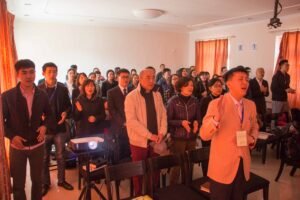
A “house church” in China
There are over 50 countries that are recognized as having restrictions against the Bible. China is perhaps the most popular entry.
The Chinese government is known to be sort of anti-religious in general. Yet and still, there are nearly 100 million Christians in China. But the reason the current administration has been generating headlines is due to its crackdown on and control of church activities. Many worshipers are resultantly opting to congregate in informal settings, i.e. “house churches”, to evade government persecution.
WHERE THE BIBLE IS STRICTLY PROHIBITED
But China isn’t even a worst-case scenario. There are reportedly three levels when it comes to national Bible-based persecution. At the bottom is living in a country where the Good Book isn’t illegal but still “difficult or dangerous to obtain”. Think of certain parts of Nigeria for instance. Nearly half of the nation are Christian, but there are certain regions where that fact alone can put one’s life at risk. However, the entire country is not like that.
The middle tier is nations where the Bible is “illegal or highly-restricted”. The aforementioned China falls into this category. The Good Book isn’t outright illegal in China, but its sale and distribution are. It’s an odd situation, where you won’t be arrested for owning a Bible, but you can be for buying, distributing or making copies. But some are printed annually, by a single, government-approved press.
Then, at the very bottom, we have nations where the Bible is “strictly illegal and only available through covert smuggling”. In these countries, Bibles are more or less contraband. Yes, those types of things are still happening in the 21st century. And it is those 13 countries that we will specifically focus on in this post.
NORTH KOREA
Let’s start with North Korea, as it’s already pretty well known that the government is anti-Bible. The regime is ultra-tight, with residents caught in possession of a Bible – and sometimes their families also – being ruthlessly dealt with by the law. For instance, in 2023, a two-year old received a life sentence, if you can imagine that, after his parents were arrested for owning a Bible.
From a legal perspective, having a Bible in North Korea is basically akin to being a drug trafficker in Asia. You’ll end up doing hard time or perhaps even being executed.
AFGHANISTAN
The longest war the US ever fought, which lasted for 20 years, was its recent invasion of Afghanistan. One of the primary goals was to remove the Taliban, a group of Islamic fundamentalists, from power. In that regard the Americans totally failed, as the Taliban have become more pronounced in the aftermath of the war.
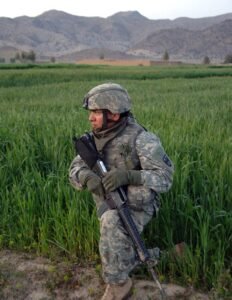
The US’s “War in Afghanistan” ultimately led to increased suppression of Christianity in the country.
That isn’t good news for Christians. Not only is owning, copying, distributing or importing a Bible illegal. But furthermore, residents aren’t even allowed to access it online. And if you decide to do so regardless, the penalties can be pretty severe, including possible execution. So believers in Afghanistan only reveal their beliefs in private, even more so than in China.
SOMALIA
Somalia is generally considered to be the very worst country for Christians, i.e. access to the Bible. Poverty is rife, and the nation is dominated by Islamic fundamentalist sentiments. So besides the usual bans on Bible ownership, distribution, etc., Somalian authorities monitor online activity to catch people who may be reading the Good Book over the ‘net. Offenders can be slapped with a death sentence, and Islamic terrorists run roughshod. So it’s understandable why there are only “a few hundred believers” in Somalia.
TAJIKISTAN, TURKMENISTAN, UZBEKISTAN, KAZAKHSTAN & KYRGYZSTAN
These five countries are neighbors in a region known as Central Asia, just north of Afghanistan. And when it comes to the Bible, they get down a lot like China.
Tajikistan Turkmenistan Uzbekistan Kazakhstan and Kyrgyzstan are not anti-religious. This part of the world is recognized as “one of the centers of… Islamic heritage”. But you may notice a recurrent theme in this post, that some Muslim countries aren’t biblically tolerant.

A map of Central Asia
Owning a Bible is not illegal in Central Asia, but Christian activities are suppressed. And what adherents are griping about the most are restrictions against teaching children any religious belief that isn’t government approved. In other words, you can’t even pass your own spiritual beliefs down to your child without pre-approval. And by the looks of things, that’s virtually impossible to get if you’re a Christian.
IRAN
The official language in Iran is Persian, also known as Farsi. Bibles printed in that language, including those that can be accessed online, are illegal.
Some minorities, i.e. those that are traditionally Muslims, may be exempt from those restrictions. For instance, an American in Iran can have a Bible, albeit one printed in English, not Farsi.
Relatedly, apostasy, i.e. converting from Islam to Christianity, is highly frowned down upon – so much so that a person can be executed for it.
Perhaps we can say, based on its geographical positioning and global reach, that there’s no way Iran can be without a Christian influence. But it’s pretty clear that the authorities do not want the religion spreading. So as a minority, you may be able to keep your Bible. But you aren’t allowed to propagate it or any Christian content. And that includes the likes of singing hymns.

The martyred St. Arethas was a leader amongst 6th century Christians violently persecuted in a city that is now part of Saudi Arabia.
SAUDI ARABIA
Saudi Arabia, which isn’t too far from Iran, has similar standards. Reportedly, it’s okay to own a personal Bible. But concurrently, it can be clearly perceived that the government discourages its dissemination.
In fact, just as recently as 2014, it became illegal to import bibles into Saudi Arabia. The country, in general, has a notable history of Christian persecution. And if you can believe it, there are even allegations of Saudis targeting Christians to be executed by crucifixion. You may be able to carry a Bible around, but obviously it isn’t encouraged.
YEMEN
Yemen, which is on the same peninsula as Saudi Arabia, practices Sharia law, i.e. Islamic fundamentalism. Of late, the country has been embroiled in a civil war, between the Republic of Yemen Government and Houthi rebels. And it has been noted that this has created an increasingly-volatile situation for residents accused of apostasy.
Regardless of who’s in power, Yemen is not a Bible-tolerant nation. Letting your possession be publicly known is a serious crime across the country.
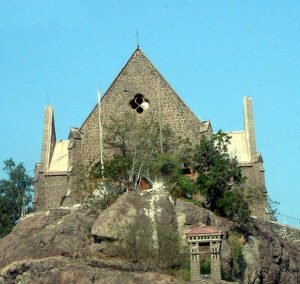
A colonial British church, which is no longer in use, in Yemen
In Yemen, it isn’t advisable to display any activity that can be interpreted as propagating Christianity. Doing so can lead to the offender losing his life. And it looks like a situation where suspects can even have their homes raided, in search of banned materials. That would explain why Yemen has such a small Christian population and why believers are compelled to keep their beliefs a secret.
THE MALDIVES
When I think of the Maldives, the first thing that comes to mind is a tropical paradise. I never imagined it as a place where Christianity is suppressed.
But in reality, not only is the Maldives an Islamic nation, but furthermore, citizens are required to be Sunni Muslims in particular. Switching over to another faith is not a legal option. And if a Maldivian proves brave enough to do so regardless, he can lose his citizenship.
Foreigners of other faiths are accepted but strongly encouraged to keep their beliefs on the low. And that includes the Maldives banning the import of Christian literature.
MAURITANIA
Mauritania is another country where public displays of Christianity are prohibited. There is a very small Christian presence, and residents can own a Bible without facing persecution. But doing anything that gives the impression you’re trying to push it is a big legal no-no.
Apparently, in these types of situations where the Good Book is already present and accepted yet can’t be imported, the government isn’t going to bother you for having one. But obviously, they want the number of bibles in the country to decrease over time. And apparently, laws stifling non-Islamic beliefs in Mauritania are very effective, with virtually 100% of the population being Sunni Muslims.
CONCLUSION
Most of the countries that ban the Bible on extreme levels are Islamic in nature. But there are also a couple on this list that are anti-religious in general.
And one thing becomes clear in this research. The legal status of the Bible within a country is indicative of how much Christianity is tolerated. So if, as a Christian, you decided to travel to any of the nations on this list, it may be wise to research the authorities’ concurrent standing of the Bible. And if you’re someone with Biblical inclinations already living in a place like Afghanistan or North Korea, may God be with you.