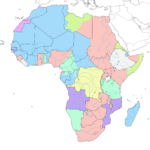
10 Diseases Travelers to Africa Should Know About
Sometimes, Africa gets a bad rap when it comes to diseases. For instance, the biggest news coming out of the Motherland these days is perhaps the latest Ebola outbreak even though, relatively speaking, it’s only affecting a handful of people in a particular part of a particular country.
But that said, as someone traveling to Africa, there are definitely some diseases you should know about. It is important that readers take note of the fact that this is not professional medical advice meant to replace consulting a physician. Rather, it’s a breakdown of some of the less-newsworthy diseases that can sneak up on a traveler.
MALARIA
At the top of the list is malaria, which is primarily an African disease. It’s transmitted by mosquitoes, a pest that is virtually impossible to avoid on in many parts of the continent. More specifically, malaria is an equatorial disease. So if you’re coming to West Africa, Central Africa or East Africa, be on alert.
I’m intimately familiar with malaria, having caught it a couple of times myself. If you’re coming over and don’t mind popping pills, it may be best to take anti-malaria medicine before landing. Catching malaria, especially the first time, is very painful and a major inconvenience in other ways. And even though mosquito repellent is effective, you probably don’t want to be lathering it on your skin or sleeping under a bed net every night.
YELLOW FEVER
Yellow fever is another disease, spread by mosquito, which is known to particularly affect the equatorial belt of Africa. It’s so pervasive that proof of vaccination even has its own nickname – “the Yellow Card”.
There are a number of African countries, i.e. those where catching the disease is most probably, that require foreigners to possess a Yellow Card before entry. And here’s the funny thing about it. There are vastly more countries, including some in Africa, that also require you to get vaccinated if you’re traveling from a country where yellow fever is common. That illustrates how fearful governments are of it spreading.
DENGUE FEVER
Mosquitoes in Africa are truly a foul lot. Besides their bites being unavoidable, irritating and sometimes even painful, there are different types with their own respective diseases. Generally speaking, mosquitoes are most aggressive at night, in the dark. But there also those who strike when the sun is coming up or down. And it is that type, in West and East Africa, that transmit dengue fever.
Dengue is not as widespread, nor is it deadlier than malaria. The latter gets more press. So even in Africa, people with dengue or often misdiagnosed with malaria.
SCHISTOSOMIASIS (BILHARZIA)
One of the most widespread parasitic disease in Africa is schistosomiasis, aka bilharzia. However, this one is not spread by mosquitoes. Rather, most simply put, it happens when inland, freshwater bodies are affected by human excrement, and someone then uses the sick water to fish, wash or swim.
The World Health Organization is active in preventing many African diseases.
Bilharzia is likewise concentrated in the equatorial region, beginning in West Africa but then extending southeast. And there is no vaccine for it. It isn’t as deadly as malaria but can be a silent killer. Malaria strikes fast. But the parasite that causes bilharzia, if untreated, can incubate in the human body for decades before becoming fatal.
TYPHOID FEVER
Unfortunately, there are certain standards and practices in Africa that make the likelihood of catching a disease caused by human excrement more possible. Another one is typhoid fever. It can be contracted by ingesting contaminated water or eating compromised food. And it’s deadlier than bilharzia, killing more often and rapidly. There are vaccines against typhoid, and it’s commonly treated if detected early enough.
CHOLERA
Cholera is caused just like typhoid, by eating food or drinking water contaminated with feces. Both are sanitation issues. But whereas typhoid has become concentrated along the equator, cholera is more a Central African disease.
Cholera is a common occurrence in the waters of the Congo River Basin. Also, Central Africa is a region besieged by troubling regional conflicts. So millions of people living in concentration camp. And perhaps needless to say, those localities have sanitation issues where cholera can also spread.
AFRICAN SLEEPING SICKNESS
African sleeping sickness is very much deadly if left untreated. It earned that strange name first of all being limited to central-east Africa. And secondly, it causes major disturbances in sleep patterns, i.e. being sleepy in the daytime and awake at night.
The pests that spread this disease are known as tsetse flies. And get this – they are most attracted to people moving cars.
So the good news is that for the most part, they’re not urban animals. Also, their preferred meal is large animals, not humans. So relatedly, tsetse flies live mostly in wild areas. And due to advances in medicine, the disease isn’t common at all. Where a traveler may be at most risk is in a car in going through a safari park where there’s tsetse flies.
MENINGOCOCCAL MENINGITIS
Meningococcal Meningitis is an airborne disease that’s even frightening to write about. Some people are able to live with the bacteria without being adversely affected. Others are devastated by it, often dying or developing lifelong complications, even with treatment. And once it takes hold, it can kill in a matter of hours.
This sub-Saharan disease is most potent during the Harmattan (i.e. dry season) or in crowded urban spaces. Being airborne and resting in the throat, it can be transmitted by acts as simple as coughing or sharing drinks.
Meningococcal Meningitis kills roughly 125,000 people in Africa annually. Sometimes there are epidemics, and that number can skyrocket, concentrated in certain regions. I haven’t heard much about this disease living in Ghana. But in any event, there is a vaccine for it.
RABIES
Over 20,000 people die of rabies on African soil a year. Serious cases most commonly occur in urban areas. And when it comes to the transmission of rabies in the Motherland, it is almost invariably by dog, whether domestic or stray.
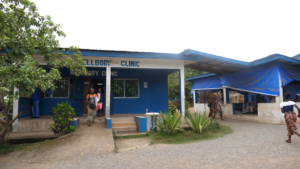
Clinics in rural parts of Africa are cool for minor issues, but they don’t offer comprehensive treatment.
As a traveler, it is possible that you will interact with a dog along the way, and it may even bite or scratch you. But it’s exponentially-less likely that you’ll contract rabies and die from it. The reason the bush, i.e. rural areas, are more vulnerable is because of their limited access to vaccines and advanced medical care.
TRAVELER’S DIARRHEA
The one disease visitors have to worry about most, even in Africa in terms of its ubiquity, is traveler’s diarrhea. A common way of catching it is by ingesting even a tiny amount of contaminated tap water. Or if foods like fruits and vegetables are washed in sick water and you eat it, you may also catch this disease.
I’m sure anyone who’s ever had diarrhea knows that it can easily ruin a trip. And there are some severe varieties, including dysentery, of the traveler’s type.
CONCLUSION
It’s unfortunate how poor sanitation practices are facilitating the spread of major diseases in Africa. Other than that, pests that propagate sickness are a big issue in some places. Most of the diseases on this list can prevented or treated. Catching any of them absolutely sucks, but it’s even rarer to hear of a traveler to Africa dying of one.