
Flag of Nicaragua: Meaning, History, and Symbolism
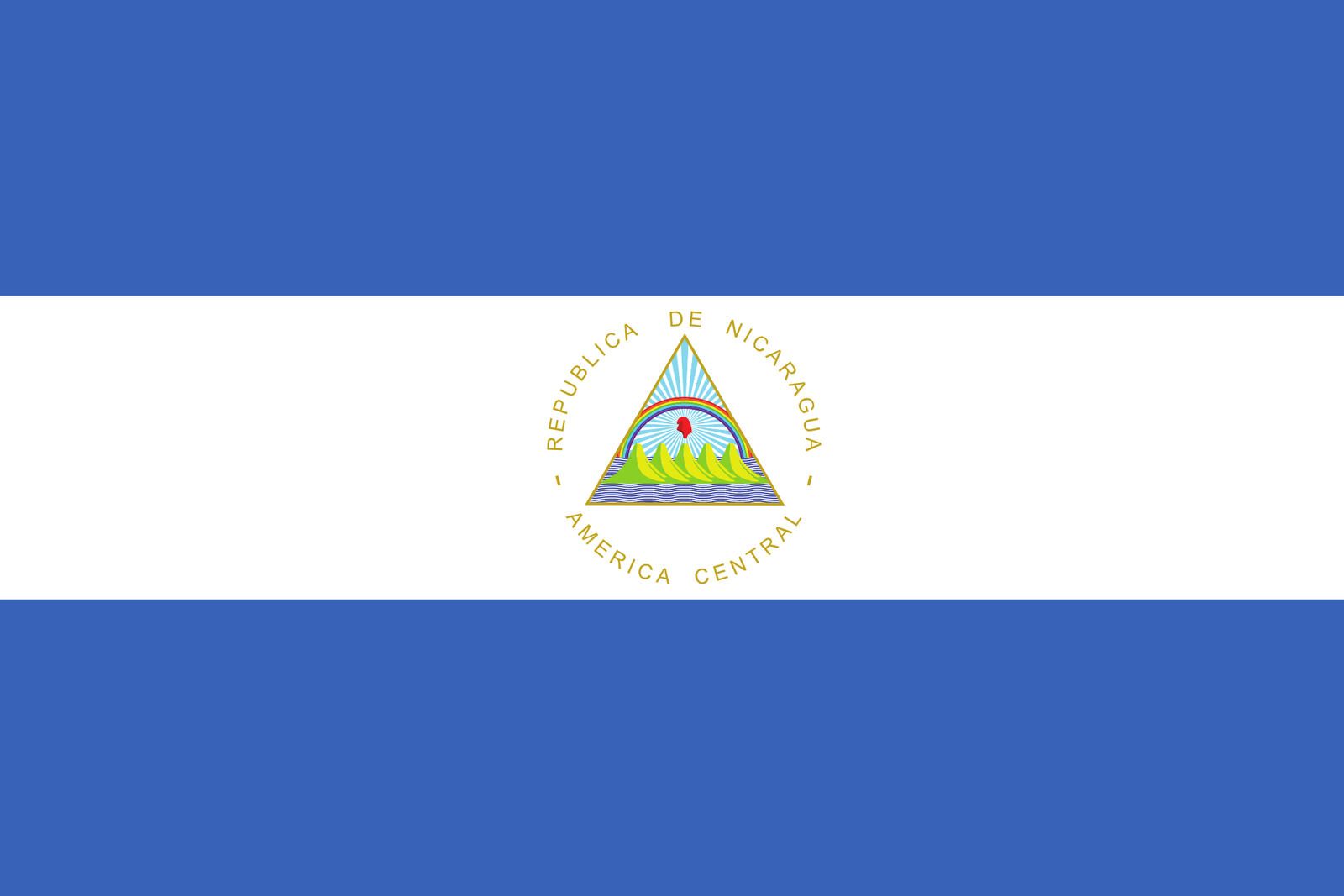
The flag of Nicaragua is one of the most recognizable symbols in the whole of the region of Central America. With its blue and white stripes and striking national coat of arms, the flag represents the country’s history as well as its geography. Like every national flag, it is more than just a design. In this post, we are going to delve into the meaning of the flag while also touching on some fascinating facts surrounding both flag and country.
The Design of the Nicaraguan Flag
At first glance, the flag of Nicaragua may seem simple with its three bold stripes, but every line and color tells a story about the nation’s geography and values as well as its place in Central America.
Blue Stripes
The top and bottom blue stripes represent the Pacific Ocean to the west and the Caribbean Sea to the east, the two mighty waters that cradle Nicaragua. These stripes remind Nicaraguans that their land is shaped and defined by these seas, both geographically and culturally. Beyond the map, blue is also the color of justice, loyalty, and solidarity, indicating that the country’s strength lies in fairness and unity among its people.
White Stripe
The white band in the middle is like a bridge connecting the two seas. It represents three primary things, namely peace, purity, and unity. White also reflects the aspiration of a nation that has endured struggles yet continues to seek harmony and balance. One can confidently conclude that it symbolizes the hope that Nicaraguans of all backgrounds can live side by side in respect and cooperation.
The Coat of Arms
What truly sets Nicaragua’s flag apart from its Central American neighbors is the national coat of arms placed proudly in the center. Without it, the flag would closely resemble others from the former Federal Republic of Central America. The coat of arms makes Nicaragua’s identity unmistakable.
Inside the emblem you’ll find the following:
- A triangle, which stands tall for equality and the republic.
- Five volcanoes that are rising together. This represents the unity of the five Central American nations that once formed a federation.
- Above them, a rainbow arches across the sky. This carries the promise of peace and hope for the future.
- At the very top sits a Phrygian cap. This is an international emblem of liberty. It represents the idea that freedom is at the heart of the nation.
- The surrounding circle spells out “República de Nicaragua – América Central”, anchoring the flag in its regional identity.
Which five nations are symbolized by the volcanoes on Nicaragua’s coat of arms?
The five volcanoes represent the following countries:
- Guatemala
- El Salvador
- Honduras
- Nicaragua
- Costa Rica
These were the five original member states that made up the Federal Republic of Central America. After independence from Spain, this republic existed from 1823 all the way to 1838. All five nations stood side by side in the federation, much like the volcanoes rising together in the emblem.
When the federation dissolved, Nicaragua retained the design but added its own coat of arms to distinguish its flag from those of neighboring countries. Over time, minor modifications were made to the emblem, but the flag’s overall look has remained consistent since the 19th century.
The Flag in Modern Nicaragua
Today, the flag is proudly flown across government buildings, schools, and homes. It is displayed during Independence Day celebrations on September 15, alongside parades, music, and cultural performances.


